Sometimes the heart feels heavy because of past mistakes. We may remember words we wish we had never spoken, choices we wish we could change, or moments when we turned away from God. In those quiet moments, one question can rise in the heart: Can God really forgive me?
The Bible gives a beautiful answer. Forgiveness of sins is one of the greatest messages of Christian faith. It tells us that God does not want us to remain trapped in guilt and shame. Through His mercy and grace, He offers a way back to Him.
The forgiveness of sins is not simply forgetting a mistake. It is about being cleansed, restored, and brought into peace with God. Scripture shows that forgiveness comes through God’s mercy and, for Christians, through faith in Jesus Christ.
But what is the forgiveness of sins biblical meaning? What does the Bible teach about it? And what can forgiveness mean for someone who is seeking peace, healing, or a fresh beginning?
Let us explore this powerful biblical truth and discover how God’s forgiveness can bring hope, freedom, and spiritual transformation.
Biblical Meaning of Forgiveness of Sins
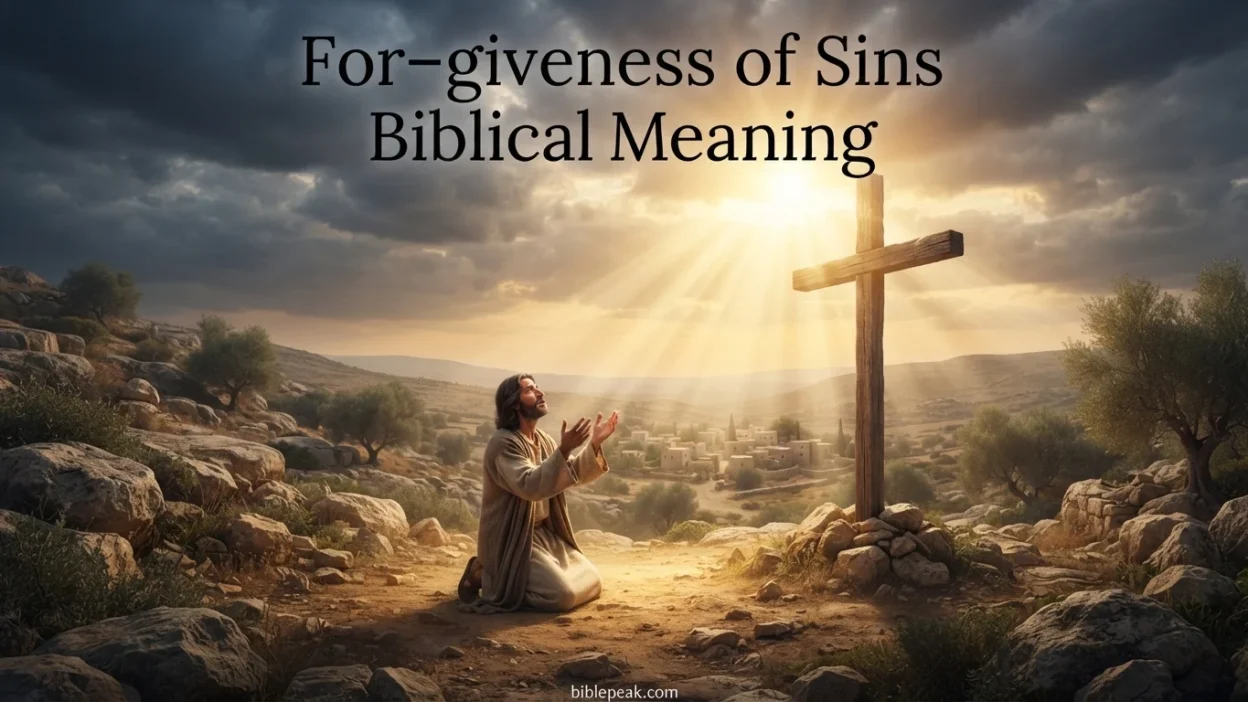
The forgiveness of sins biblical meaning is the removal of guilt and the restoration of a person’s relationship with God through His mercy and grace. In the Bible, forgiveness shows that God is willing to pardon those who turn to Him with a sincere heart.
Sin separates people from God. Yet Scripture repeatedly shows that God is rich in mercy. He does not delight in keeping people away from Him. Instead, He calls them to repentance and offers forgiveness.
One of the clearest verses is 1 John 1:9:
“If we confess our sins, he is faithful and just to forgive us our sins and to cleanse us from all unrighteousness.”
This verse gives great comfort. It shows that forgiveness is connected with confession, God’s faithfulness, and cleansing.
Forgiveness Shows God’s Mercy
The Bible presents God as compassionate and ready to forgive. Psalm 103:12 says that God removes our sins far from us. This picture helps us understand the depth of His mercy.
When God forgives, He does not want us to live forever under the weight of our past. His forgiveness points toward a new life.
This does not mean sin is unimportant. Sin matters deeply to God. But His mercy is greater than our failure.
For a Christian, this is a powerful message: your worst mistake does not have to be the end of your story.
Forgiveness Through Jesus Christ
The New Testament connects forgiveness closely with Jesus Christ. In Ephesians 1:7, Paul teaches that believers have redemption and forgiveness through Christ.
Jesus’ sacrifice is central to Christian belief. His death on the cross shows the seriousness of sin while also revealing the depth of God’s love.
Acts 10:43 says that everyone who believes in Jesus receives forgiveness of sins through His name.
This means forgiveness is not something Christians earn by being perfect. It is a gift of God’s grace received through faith.
Forgiveness Requires a Turning Heart
Biblical forgiveness is closely connected with repentance. Repentance means turning away from sin and turning toward God.
Acts 3:19 calls people to repent and turn to God so that their sins may be wiped away.
True repentance is more than saying, “I am sorry.” It involves a heart that desires to change and walk with God.
God knows when our repentance is sincere. He sees the heart, even when we struggle to find the right words.
Forgiveness Brings Freedom From Guilt
Many people understand forgiveness in their minds but still struggle to feel forgiven. They continue thinking about their past and asking, “How could God forgive someone like me?”
The Bible offers hope here too.
Romans 8:1 teaches that there is no condemnation for those who are in Christ Jesus. This does not mean Christians never make mistakes. It means their identity is no longer controlled by condemnation.
God’s forgiveness can bring peace instead of shame, hope instead of despair, and freedom instead of fear.
Forgiveness Is Also a Call to Forgive Others
Jesus taught His followers to forgive others. In Matthew 6:14, He explains the importance of forgiving those who have wronged us.
This can be difficult. Some wounds are deep. Forgiving someone does not mean pretending the hurt never happened or approving harmful behavior.
Instead, Christian forgiveness means choosing to release revenge and place justice in God’s hands.
When we understand how much God has forgiven us, our hearts can slowly become more willing to forgive others.
Spiritual Significance and Symbolism of Forgiveness
The spiritual symbolism of forgiveness is deeply connected with cleansing, restoration, freedom, and new beginnings.
Throughout Scripture, forgiveness is described with powerful images. Isaiah 1:18 speaks of sins becoming white like snow. Psalm 51:10 asks God for a clean heart and a renewed spirit.
These images show an important spiritual truth: God does not only want to remove our guilt; He wants to transform our hearts.
Forgiveness can mark a new chapter in a person’s faith journey.
Imagine someone who has carried guilt for many years. They begin to pray honestly and confess their sins to God. At first, they may still feel afraid. But as they trust God’s promises, peace begins to grow.
That is part of spiritual transformation.
Forgiveness also teaches us humility. We learn that we need God’s grace every day. We do not stand before Him because we are perfect. We stand because He is merciful.
This can lead to a deeper prayer life and a stronger awareness of the presence of God.
Forgiveness may also bring spiritual awakening. A person who once felt far from God may begin seeking Him again. They may read Scripture, pray more often, and desire to live according to His ways.
The Christian meaning of forgiveness is therefore not only about the past. It changes how we walk into the future.
Biblical Interpretations of Forgiveness in Dreams or Real Life
People may experience forgiveness in different ways. Someone may dream about being forgiven, hear a Bible verse about mercy, or suddenly feel a strong desire to return to God.
From a Christian perspective, such experiences should be tested against Scripture rather than treated automatically as a divine message.
A peaceful dream about forgiveness may reflect a desire for healing, reconciliation, or spiritual peace. A dream filled with fear or guilt may simply reveal emotions that need to be brought before God in prayer.
The Bible remains the safest foundation for interpretation.
If you dream about someone forgiving you, it may remind you to seek reconciliation where it is wise and safe. If you dream about asking God for forgiveness, it may encourage honest prayer and reflection.
However, not every dream has a spiritual meaning. Christians should avoid building major decisions on dreams alone.
Instead, pray, read Scripture, and seek wise Christian counsel. Let God’s Word guide your understanding.
Practical Lessons and Faith Insights
The message of forgiveness is simple but powerful:
- Confess your sins honestly to God.
- Trust His mercy instead of living in shame.
- Turn away from sinful patterns.
- Accept God’s grace through faith.
- Learn to forgive others.
- Let God transform your heart.
When guilt becomes heavy, return to God’s promises. His forgiveness is a reason to hope.
Conclusion
The forgiveness of sins biblical meaning points to God’s mercy, grace, cleansing, and restoration. Through faith in Jesus Christ, Christians believe that sin can be forgiven and that people can begin a new life with God.
Forgiveness does not erase the lessons of the past, but it can free us from being controlled by it. When your heart feels burdened, remember that God invites you to come to Him with honesty and faith.
Your past may be part of your story, but through God’s grace, it does not have to define your future.

Alexander Cody is a Bible researcher and Christian writer at BiblePeak, dedicated to exploring biblical codes, Scripture insights, and faith-based studies. He creates clear, engaging, and well-researched content that helps readers better understand the Bible and its timeless messages.