
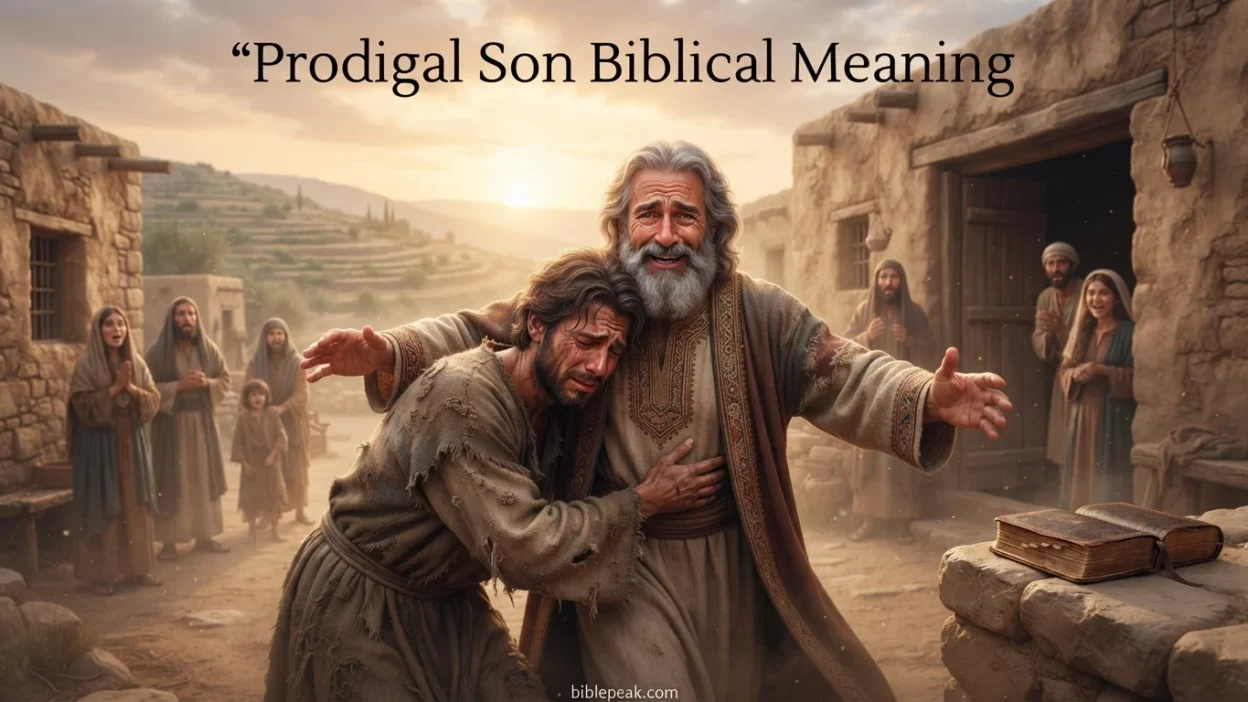
Imagine a young man leaving his father’s home with a heart full of dreams. He takes his share of the family wealth and goes far away. For a while, he lives the life he wants. But soon, everything is gone.He loses his money, his comfort, and his way.
Hungry and broken, he remembers his father’s home. He thinks, “I will go back.” He does not expect a grand welcome. He only hopes to become a servant.
But when his father sees him coming, something beautiful happens. His father runs to him, hugs him, and welcomes him home.
This is the powerful story of the prodigal son found in Luke 15:11–32. Jesus told this story to show the deep love of God for people who turn back to Him.So, what is the prodigal son biblical meaning?
The story is much more than a story about a lost son. It is about repentance, forgiveness, grace, restoration, and God’s unfailing love. It shows that even when people wander far from God, the door of His mercy remains open.
The story also speaks to anyone who feels lost, ashamed, or far from God. It reminds us that returning to God is always possible.
Let us look deeper at what this beautiful Bible story teaches about faith, hope, and the heart of God.
Biblical Meaning of the Prodigal Son
The main prodigal son biblical meaning is a picture of God’s love for sinners who return to Him. Jesus shares this story in Luke 15:11–32.
The younger son asks his father for his share of the inheritance. This was a painful request. He wanted his father’s gifts without staying close to his father.
He leaves home and wastes everything.
This part of the story can represent the human desire to live without God’s guidance. People may chase money, pleasure, success, or freedom. These things may look satisfying at first, but they cannot give the heart lasting peace.
The Prodigal Son Represents a Lost Heart
The son eventually becomes poor and hungry. His situation becomes so bad that he works with pigs and longs to eat their food.
Then something changes.
Luke 15:17 says that “he came to himself.”
This is an important moment. He realizes that he has made a wrong choice. He remembers his father’s house and decides to return.
This can represent repentance.
Repentance means turning away from sin and turning back toward God. It is not only feeling sorry. It is choosing a new direction.
The prodigal son teaches us that a person can fall, fail, and wander, but failure does not have to be the end.
The Father Shows God’s Grace
One of the most touching parts of the story is the father’s response.
When the son returns, the father does not reject him. He does not make him prove himself first. Instead, he runs to him, embraces him, and celebrates his return.
Luke 15:20 shows the father welcoming his son with compassion.
This gives us a beautiful picture of God’s grace.
God sees the heart of the person who comes back to Him. His forgiveness is not based on human perfection. His mercy flows from His love.
The father also gives his son a robe, a ring, and sandals. These gifts show restoration and acceptance.
The son came home feeling unworthy, but the father treated him as a beloved son.
A Message of Forgiveness
The story also teaches about forgiveness.
The son had wasted his inheritance. He had made serious mistakes. Yet his father chose mercy instead of rejection.
This reflects the message of 1 John 1:9: when we confess our sins, God is faithful and just to forgive us and cleanse us.
The prodigal son reminds Christians that God does not delight in keeping repentant people away. He welcomes those who sincerely turn back to Him.
A Warning About Pride
The story also includes the older brother.
The older brother becomes angry when his father celebrates the return of the younger son. He believes the celebration is unfair because he has stayed faithful.
This gives another important lesson.
A person can be physically close to God but have a heart filled with pride, anger, or resentment.
The story challenges us to rejoice when others receive God’s mercy. God’s grace is not something we earn. It is a gift.
The prodigal son story therefore speaks to both the lost person who needs to return and the faithful person who needs to grow in love and grace.
Spiritual Significance and Symbolism
The spiritual symbolism of the prodigal son is rich and deeply comforting.
The father’s house can represent fellowship, safety, love, and the presence of God. Leaving home can symbolize moving away from God’s ways.
The far country can represent a life controlled by selfish desires. It may look exciting for a time, but it can leave the soul empty.
The return home represents repentance and spiritual awakening.
The father’s open arms represent grace and forgiveness. They remind us that God is not looking for reasons to reject a repentant heart.
This story can speak to many parts of life.
Maybe you feel distant from God because of a past mistake. Maybe you stopped praying. Maybe you made choices that you regret. The prodigal son shows that your past does not have to control your future.
You can turn back.
You can pray again.
You can seek God again.
You can begin again.
The story also teaches that spiritual transformation begins when we recognize our need for God. The son changed when he realized that the life he chose was not giving him what he truly needed.
His journey home became a journey of restoration.
For Christians, this is a powerful reminder that God cares about the heart, not just outward behavior. He wants a relationship built on love, trust, humility, and faith.
Biblical Interpretations in Dreams or Real Life
If you dream about the prodigal son, returning home, a father welcoming a child, or someone coming back after being lost, the experience may bring thoughts about repentance, forgiveness, restoration, or reconciliation.
However, the Bible does not say that every dream has a special divine meaning. Christians should avoid treating every dream as a direct message from God.
Instead, compare the experience with Scripture and pray for wisdom.
If the dream leaves you feeling peaceful, it may encourage you to think about God’s mercy and your relationship with Him.
If it brings fear or sadness, it may lead you to examine areas of your life that need healing, forgiveness, or change.
In real life, the story may also speak to family relationships. Someone may have left, made mistakes, or become distant. The message is not that every relationship must be restored in the same way, but that forgiveness and grace matter deeply to God.
James 1:5 reminds believers to ask God for wisdom. Prayer is a safe place to seek guidance.
Practical Lessons & Faith Insights
The prodigal son teaches us to return to God when we wander, accept His forgiveness, and extend grace to others.
Do not let shame keep you away from God. Bring your mistakes to Him through honest prayer.
Trust His mercy. Learn from your past. Choose obedience today. And remember that God’s timing and ways are greater than our own.
Conclusion
The prodigal son biblical meaning points to one beautiful truth: God welcomes the repentant heart with love and grace.
The story teaches repentance, forgiveness, restoration, humility, and hope. Whether you feel lost like the younger son or challenged by the older brother, Jesus’ message speaks to your heart.
God’s love invites you home. Turn toward Him, trust His grace, and walk forward in faith.

David Wyatt is a Bible researcher and Christian writer passionate about uncovering coded biblical insights, symbolism, prophecy, and scriptural meanings. He shares faith-based, well-researched content that inspires deeper Bible study.