Imagine finishing a long and tiring week. Your mind is busy, your body feels tired, and you still have many things to do. Then you stop. You become quiet. You pray. You remember that God is with you. This simple pause can help your heart breathe again.
This is close to the heart of the Sabbath biblical meaning.
The Sabbath is more than taking a day off. In the Bible, it is connected with rest, worship, trust, holiness, and the presence of God. It reminds people that life is not only about work and achievement. We also need time to stop, remember our Creator, and enjoy His goodness.
The first picture of Sabbath rest appears in creation. God created the heavens and the earth in six days, and then He rested on the seventh day.
Genesis 2:2 says that God “rested from all his work.”
God did not rest because He was tired. His rest showed that His work was complete. He blessed the seventh day and made it holy.
So, what does Sabbath mean for a Christian today? What does this biblical symbolism teach us about faith and our relationship with God? Let us explore its deeper meaning.
Biblical Meaning of Sabbath
Sabbath Means Rest
One of the clearest meanings of the Sabbath is rest.
In Exodus 20:8–10, God gave Israel the command to remember the Sabbath and keep it holy. The people were told to work for six days, but the seventh day was a day of rest.
This command showed that God cares about human needs. People need time to stop working and recover.
The Sabbath teaches an important lesson: you are not created only to work.
Modern life can make us feel that we must always be busy. We may feel guilty when we stop. But the Bible shows that rest has value.
Rest can become an act of faith because it says, “God, I trust You even when I am not working.”
Sabbath Means Worship
The Sabbath was also a holy time set apart for God.
Leviticus 23:3 calls it a “Sabbath of solemn rest, a holy convocation.” It was a time for God’s people to gather, remember Him, and focus their hearts on His ways.
This gives the Sabbath a deeper Christian meaning. Rest is not simply sleeping or doing nothing. Biblical rest can turn our attention back to God.
A quiet day can become a time for prayer, reading Scripture, worship, family, gratitude, and reflection.
When life becomes loud, Sabbath reminds us to listen again.
Sabbath Means Trusting God
The Sabbath also teaches trust.
Israel lived in a world where daily work was necessary for food and survival. Stopping work required faith that God would provide.
The story of manna in Exodus 16 gives a clear example. God provided food for His people, and they were told to gather enough before the Sabbath.
This showed that God’s people could trust His provision.
The lesson still speaks to believers today. We often worry about money, work, plans, and the future. Sabbath reminds us that God is our provider.
It teaches us to release our need to control everything.
Sabbath Means Holiness
The word Sabbath is closely connected with the idea of ceasing or stopping. But biblical Sabbath was not an ordinary day. God blessed and made the seventh day holy.
Genesis 2:3 says God blessed the seventh day and made it holy.
This means the Sabbath was set apart.
Something holy is treated as special because it belongs to God. The Sabbath therefore reminded Israel that time itself belongs to God.
Every moment of life is under His care.
Jesus and the Sabbath
Jesus gave the Sabbath an important and loving perspective.
In Mark 2:27, Jesus said, “The Sabbath was made for man, not man for the Sabbath.”
This is a powerful truth.
The Sabbath was designed as a gift, not a burden. It was meant to bless people with rest and help them focus on God.
Jesus also showed mercy on the Sabbath. He healed people and taught that doing good was not against God’s heart.
This helps us understand that biblical Sabbath is not about empty rules. It points toward rest, mercy, worship, and God’s goodness.
Hebrews 4 also connects God’s rest with a deeper spiritual reality. Through faith, believers are invited to enter God’s rest.
This points beyond one day on a calendar. It points toward trusting God’s finished work and finding peace in Him.
Spiritual Significance and Symbolism of the Sabbath
The spiritual symbolism of Sabbath reaches deep into the Christian life.
First, it symbolizes peace. When we stop striving, we remember that God is still working.
Second, it symbolizes dependence. We are reminded that we need God. Our strength, success, and future do not rest only on our own efforts.
Third, Sabbath represents renewal. A tired heart can become discouraged. Time with God can restore hope and bring fresh strength.
Psalm 46:10 says, “Be still, and know that I am God.”
This verse captures the heart of Sabbath beautifully. Being still creates space to remember who God is.
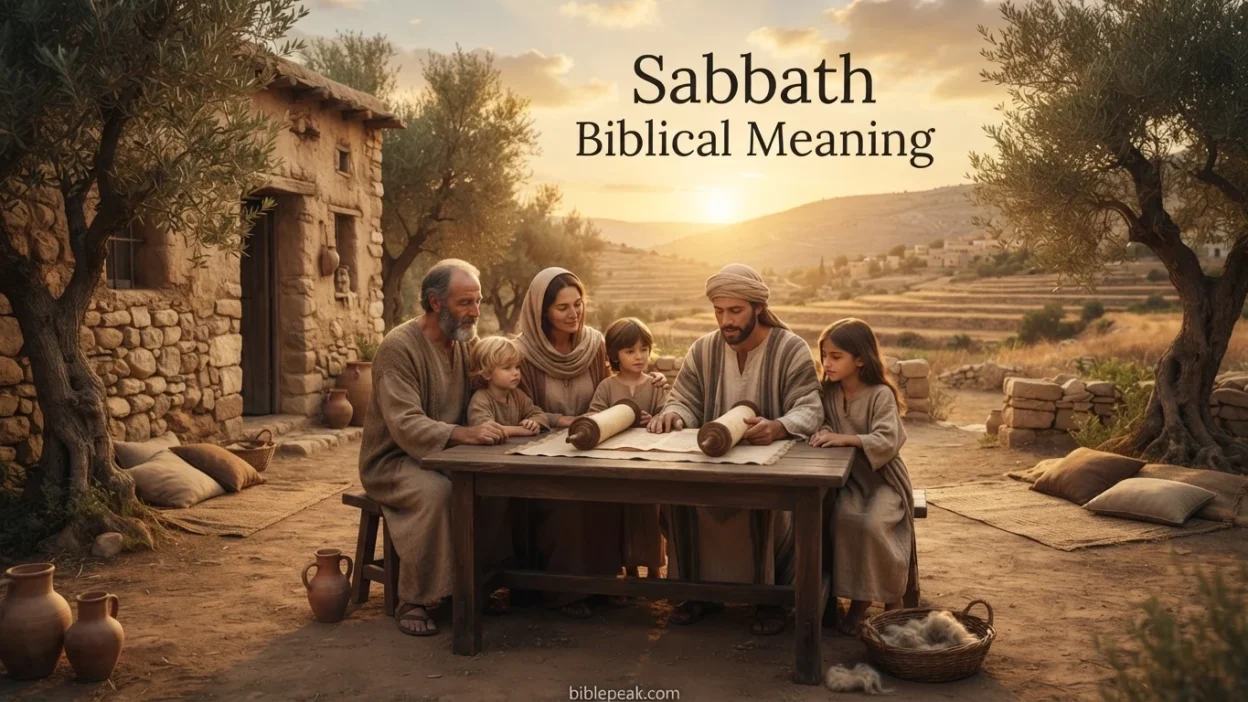
For example, a Christian may spend a quiet morning praying instead of rushing into work. Another person may read Scripture with their family, enjoy a peaceful meal, or simply thank God for His blessings.
These moments can become reminders of God’s presence.
The Sabbath also points toward spiritual transformation. God does not only want busy hands. He wants hearts that know Him.
When we regularly make space for God, we can become more thankful, peaceful, patient, and aware of His guidance.
Biblical Interpretations of Sabbath in Dreams or Real Life
If someone dreams about a Sabbath, a day of rest, a peaceful worship gathering, or stopping work, the experience may remind them of rest and spiritual renewal.
A peaceful Sabbath dream may symbolize a need to slow down and seek God’s presence.
A dream about being unable to rest may reflect stress, pressure, or a struggle to surrender control. It can be an invitation to pray and trust God rather than treating the dream as a certain divine prediction.
A dream involving worship or Scripture may encourage deeper spiritual attention.
Still, Christians should be careful with dream interpretation. The Bible does not teach that every dream contains a hidden message from God.
Instead of building faith on a dream, compare everything with Scripture, prayer, wisdom, and the character of God.
Whether in a dream or daily life, the central Sabbath message remains clear: slow down, remember God, and trust Him.
Practical Lessons and Faith Insights
The Sabbath teaches us to make room for rest, prayer, worship, family, gratitude, and reflection.
Ask yourself: Am I always rushing? Have I forgotten to enjoy God’s gifts? Am I trusting my work more than I trust God?
Take time to become still before Him. Let your heart remember that God’s love does not depend on how much you accomplish.
Conclusion
The Sabbath biblical meaning points to rest, worship, holiness, trust, and God’s provision. It reminds us that we are more than our work and that our lives belong to God.
For Christians, Sabbath can point to the deeper rest found in Christ. When life feels heavy, remember that you do not have to carry everything alone. Be still, trust God, and allow His presence to renew your heart.

David Wyatt is a Bible researcher and Christian writer passionate about uncovering coded biblical insights, symbolism, prophecy, and scriptural meanings. He shares faith-based, well-researched content that inspires deeper Bible study.