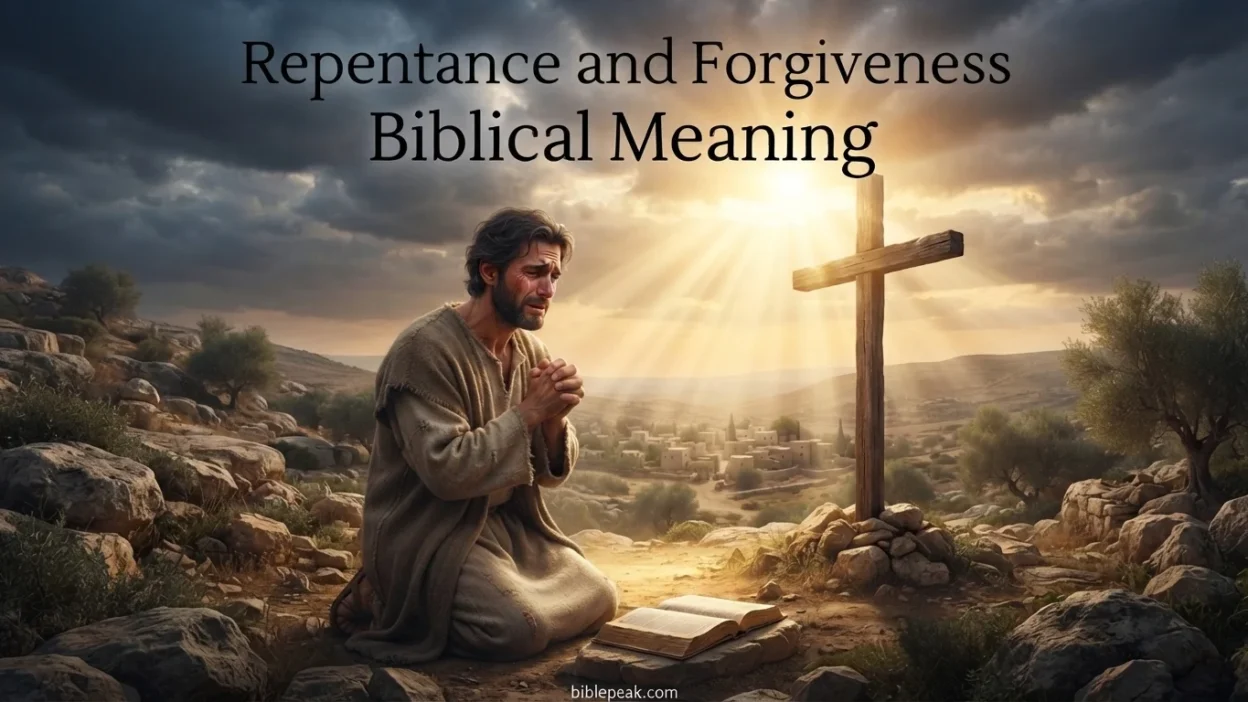
Imagine someone walking down a long road after making a painful mistake. Their heart feels heavy. They wish they could go back and make things right. Then they see a light ahead. It reminds them that the road is not over.
This picture helps us understand the repentance and forgiveness biblical meaning.
In the Bible, repentance is more than feeling sorry. It means turning away from sin and turning back to God. Forgiveness means that God removes our guilt when we come to Him with a sincere heart and trust in His mercy.
Many people search for the meaning of repentance and forgiveness because they feel broken, guilty, lost, or far from God. Others may see these ideas in a dream, during prayer, or at an important time in their lives.
So, what does repentance and forgiveness mean in the Bible?
The message is one of hope. God does not want us to remain trapped in shame. He calls us to return to Him. His forgiveness shows His love, mercy, and desire to restore our relationship with Him.
Repentance opens the heart to change. Forgiveness brings peace to the heart. Together, they point to the amazing grace of God.
Let us look deeper at what Scripture teaches about this powerful spiritual journey.
Biblical Meaning of Repentance and Forgiveness
The repentance and forgiveness biblical meaning is closely connected to returning to God, leaving sin behind, and receiving His mercy.
Repentance begins with a change of heart. A person recognizes that they have gone the wrong way and chooses to turn back toward God.
Jesus taught the importance of repentance. In Mark 1:15, He called people to repent and believe the good news. This shows that repentance is not meant to destroy our hope. It leads us toward faith.
Repentance Means Turning Back to God
Biblical repentance is not simply saying, “I am sorry.”
True repentance brings a change in direction.
For example, imagine a person who knows they have treated someone badly. They do not only feel guilty. They admit their wrong, ask God for forgiveness, and seek to change their actions.
This is the heart of repentance.
Acts 3:19 says, “Repent, then, and turn to God.” The verse connects repentance with turning toward God.
This is an important part of Christian belief. God does not ask us to hide our mistakes. He asks us to bring them into His light.
Forgiveness Shows God’s Mercy
Forgiveness is one of the most beautiful themes in Scripture.
1 John 1:9 teaches that when we confess our sins, God is faithful and just to forgive us and cleanse us from unrighteousness.
This gives hope to anyone carrying guilt.
God’s forgiveness is not based on pretending that sin does not matter. Sin matters. But God’s mercy is greater. Through Christ, believers can receive forgiveness and a restored relationship with God.
Psalm 103:12 gives a beautiful picture of God’s mercy. It says that God removes our sins from us as far as the east is from the west.
This biblical symbolism shows how completely God can remove our guilt.
Repentance and Forgiveness Bring Transformation
Repentance is not only about the past. It also changes the future.
When someone turns to God, their life can begin to move in a new direction. Their thoughts, choices, relationships, and priorities may slowly change.
Romans 12:2 speaks about being transformed by the renewing of the mind.
This is why repentance can be seen as a spiritual awakening. God invites us to leave an old way of living and grow into a new life of faith.
The Story of the Prodigal Son
One of the clearest biblical examples is found in Luke 15.
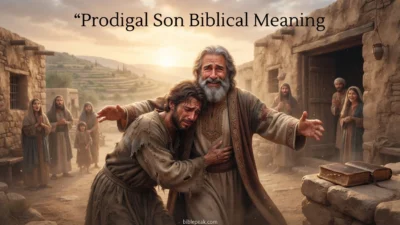
Jesus tells the story of a son who leaves his father and wastes his inheritance. Later, he realizes his mistake and decides to return home.
The father does not reject him.
Instead, the father welcomes him with love.
This story gives us a powerful picture of repentance and forgiveness. The son turns back, and the father receives him.
It reminds us that God welcomes the repentant heart.
A Warning About False Repentance
The Bible also teaches that repentance should be sincere.
A person may say sorry but continue choosing the same wrong path without any desire to change.
True repentance begins in the heart.
This does not mean a Christian will never fail again. Everyone can stumble. But a sincere believer continues to return to God, ask for help, and seek transformation.
Proverbs 28:13 teaches that those who confess and turn from their sins find mercy.
So the biblical message is not perfection. It is humility, honesty, faith, and returning to God.
Spiritual Significance and Symbolism
The spiritual significance of repentance and forgiveness is deeply connected to restoration, cleansing, hope, and transformation.
Repentance can be pictured as turning around on a wrong road. You realize you are going in the wrong direction, stop, and begin walking toward God.
Forgiveness can be pictured as a heavy burden being lifted from your shoulders.
This is why repentance and forgiveness often bring emotional peace. A person no longer has to hide from God.
Repentance Brings a New Beginning
Every Christian has moments when they need to begin again.
Maybe you said something hurtful. Maybe you made a poor choice. Maybe you have allowed fear, anger, pride, or bitterness to control your heart.
Repentance gives you a chance to turn back.
God’s forgiveness reminds you that your worst mistake does not have to become the final chapter of your story.
Forgiveness Teaches Us to Forgive Others
The Bible also connects receiving forgiveness with forgiving others.
Ephesians 4:32 encourages believers to be kind, compassionate, and forgiving, just as God has forgiven them in Christ.
This does not mean ignoring pain or allowing harmful behavior. It means releasing personal revenge and trusting God with justice.
When God’s forgiveness changes our hearts, we can become more willing to show grace to others.
Repentance Deepens Your Relationship With God
Repentance is not only about avoiding punishment.
It is about coming closer to God.
When we pray honestly and confess our sins, we stop pretending. We become open before Him.
That honesty can deepen faith and help us experience God’s presence in a more meaningful way.
Biblical Interpretations in Dreams or Real Life
Repentance and forgiveness may appear as strong themes in dreams or real-life experiences.
For example, a dream about returning home may remind someone of the biblical story of the prodigal son. A dream about washing, clean clothing, or clear water may symbolize cleansing and a desire for a fresh start.
A dream filled with guilt or darkness may reflect a person’s inner struggle with sin or shame. It does not automatically mean that God is sending a specific prediction.
Christians should approach dream interpretation with wisdom and prayer.
The Bible should remain the main guide.
If you experience a strong feeling about repentance, take time to pray. Ask God to search your heart and guide your steps. Psalm 139:23-24 gives a helpful prayer for this kind of reflection.
The key message is comforting: you can always turn toward God with a sincere heart.
Practical Lessons & Faith Insights
Repentance teaches us to be honest with God. Forgiveness teaches us to trust His mercy.
When you recognize something wrong in your life, do not let shame push you away from God. Pray, confess, turn back, and seek His guidance.
Remember that spiritual growth takes time. God can use repentance to bring healing, wisdom, humility, and transformation.
Conclusion
The repentance and forgiveness biblical meaning points to a loving God who calls people back to Himself.
Repentance means turning away from sin and turning toward God. Forgiveness means receiving His mercy through faith and confession.
Together, they offer hope, peace, and a new beginning.
If your heart feels far from God today, you can turn back. His mercy invites you home.

David Wyatt is a Bible researcher and Christian writer passionate about uncovering coded biblical insights, symbolism, prophecy, and scriptural meanings. He shares faith-based, well-researched content that inspires deeper Bible study.