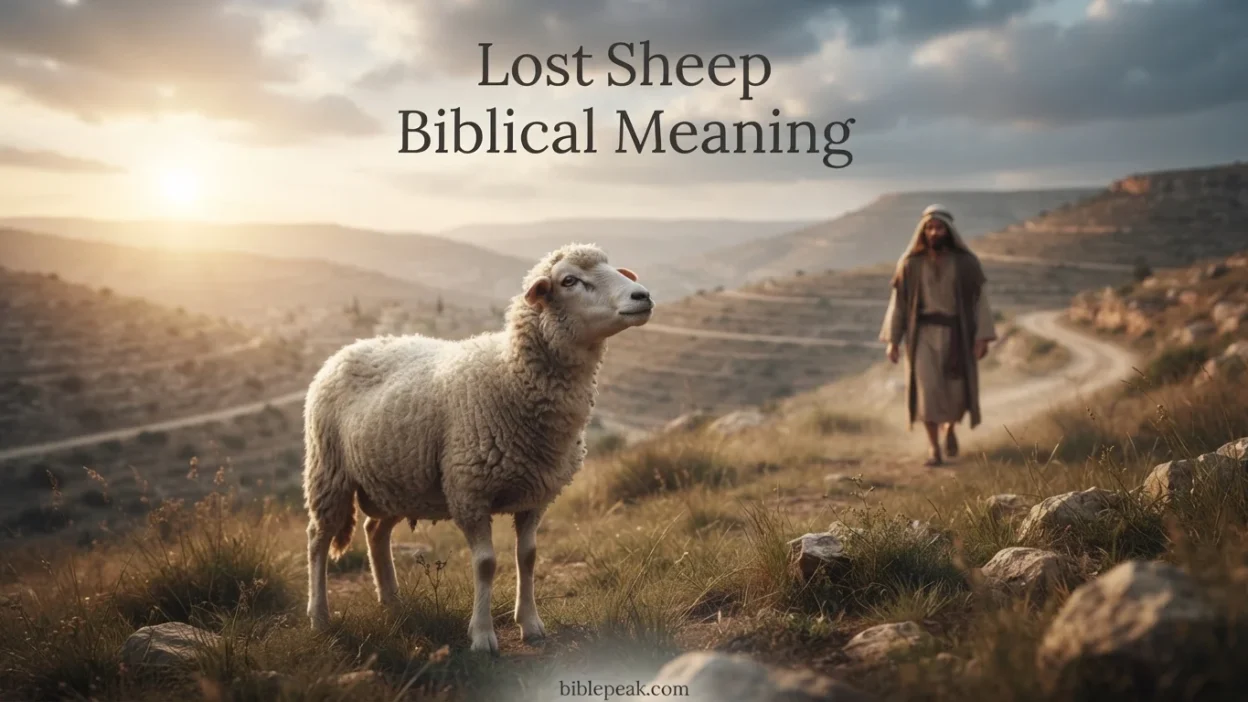
Imagine a small sheep walking away from the flock. It does not know how far it has gone. The path becomes quiet, and the familiar sounds of the shepherd fade away. Yet the shepherd does not forget it.
This picture is at the heart of the lost sheep biblical meaning.
In the Bible, a lost sheep is more than an animal that has wandered away. It is a powerful picture of a person who feels distant from God, lost in life, or unsure of the right path. It also shows the deep love of God, who seeks those who have wandered.
Jesus used the image of a lost sheep to teach about God’s mercy and care. He wanted people to understand that every person matters to God.
If you have seen a lost sheep in real life, dreamed about one, or keep thinking about this image, you may wonder, “What does the lost sheep mean in the Bible?”
The answer brings a message of hope, repentance, guidance, and God’s unfailing love.
Let us explore what Scripture teaches about the lost sheep and how its message can speak to your faith journey.
Biblical Meaning of Lost Sheep
The Bible often uses sheep as a picture of God’s people. Sheep need a shepherd because they can easily wander, become afraid, or lose their way. In the same way, people need God’s guidance.
One of the clearest teachings about the lost sheep comes from Jesus.
1. The Lost Sheep Represents Someone Who Has Wandered
In Matthew 18:12–14, Jesus tells about a shepherd who has one hundred sheep. One sheep wanders away. The shepherd leaves the ninety-nine and goes to look for the one that is lost.
This gives us a beautiful part of the christian meaning of a lost sheep.
The lost sheep can represent a person who has moved away from God. This may happen through sin, poor choices, fear, doubt, pain, or simply becoming distracted by the world.
You may feel lost after making a mistake. You may feel far from God after a difficult season. You may even wonder if God still cares.
The lost sheep reminds you that God does not forget you when you wander.
2. The Lost Sheep Represents God’s Great Love
The shepherd does not say, “The sheep made its choice, so I will leave it.”
He goes looking for it.
Jesus says that the shepherd rejoices when he finds the lost sheep. This teaches us something precious about God’s heart.
God values every person.
Luke 15:4–7 gives a similar picture. Jesus explains that there is joy in heaven when one lost sinner repents.
This is one of the strongest themes in the biblical symbolism of the lost sheep: God seeks, restores, and welcomes those who return to Him.
You are never too far away for God’s love to reach you.
3. The Lost Sheep Can Symbolize Repentance
A lost sheep must be found and brought back to the flock. Spiritually, this can point to repentance.
Repentance means turning away from sin and turning back toward God.
The Bible says in Isaiah 53:6, “All we like sheep have gone astray.”
This verse shows that wandering is a human problem. Everyone can lose direction.
But the message does not end with being lost.
It points toward restoration.
When you realize that you have gone the wrong way, God invites you to turn back. His desire is not to destroy you but to bring you home.
4. The Shepherd Represents God and Christ
The shepherd is one of the most comforting images in Scripture.
In Psalm 23:1, David says, “The Lord is my shepherd.”
This means God provides, protects, leads, and cares for His people.
Jesus also says in John 10:11, “I am the good shepherd.”
The Good Shepherd knows His sheep and cares deeply for them.
So, the spiritual meaning of a lost sheep is closely connected to the relationship between the Shepherd and His sheep.
When you feel confused, God can guide you.
When you feel weak, God can strengthen you.
When you feel lost, God can lead you home.
5. A Lost Sheep Can Be a Warning
The image also carries a gentle warning.
A sheep that leaves the flock can face danger. It may become exposed, confused, or unable to find its way back.
Spiritually, this can remind Christians not to ignore God’s direction.
Proverbs 14:12 teaches that there is a way that may seem right but can lead to destruction.
The message is simple: do not let pride, sin, fear, or worldly distractions lead you away from God.
The lost sheep is therefore both a message of comfort and a call to return.
6. The Lost Sheep Brings a Message of Hope
Perhaps the most beautiful meaning is hope.
The sheep may be lost, but it is not forgotten.
The sheep may be far away, but the shepherd is still looking.
The sheep may be afraid, but the shepherd wants to bring it home.
This is why the lost sheep can speak deeply to someone going through a hard season.
If you feel spiritually tired or distant from God, this biblical symbolism reminds you that your story does not have to end in the wilderness.
God still calls you back.
Spiritual Significance and Symbolism of the Lost Sheep
The lost sheep carries several spiritual lessons for Christian life.
God Seeks Those Who Are Lost
The first lesson is that God seeks the lost.
Luke 19:10 says that Jesus came “to seek and to save the lost.”
This shows God’s heart toward people who feel far from Him.
You do not need to have everything perfect before coming to God. You can come with your questions, failures, fears, and broken heart.
God Offers Direction
Sheep need a shepherd because they do not always know the safest path.
People are similar.
Life can give us many choices. Some look good but take us away from God.
The lost sheep reminds us to seek divine guidance through Scripture, prayer, wisdom, and faith.
When you are unsure about your next step, pause and pray instead of rushing.
God Restores What Has Wandered
The shepherd does not simply find the sheep and leave it where it was.
He brings it back.
This can represent transformation and restoration.
Perhaps you have walked away from prayer. Perhaps you stopped reading the Bible. Perhaps disappointment made you question God.
The lost sheep says that returning is possible.
One step toward God can begin a new season of faith.
You Are Valuable to God
The shepherd searched for one sheep.
That detail matters.
It shows that individuals matter to God.
You are not just part of a crowd. God cares about your life, your struggles, and your spiritual journey.
The lost sheep therefore carries a deeply personal spiritual message: you matter to God, even when you feel forgotten.
Biblical Interpretations of Lost Sheep in Dreams or Real Life
Seeing a lost sheep in a dream or real life can lead to personal reflection. However, the Bible does not say that every dream has a fixed meaning.
A dream interpretation should be approached with prayer and wisdom rather than fear.
If the sheep is lost but you feel peaceful, it may remind you of God’s desire to guide and restore you.
If the sheep is frightened, trapped, or alone, it may reflect feelings of confusion, fear, or spiritual distance.
If you see a shepherd finding the sheep, the image may encourage you to think about God’s protection and restoration.
If you are the one searching for the sheep, it may remind you to care for someone who is struggling or far from faith.
The safest approach is to compare the experience with Scripture. Ask God for wisdom and do not build major decisions on a dream alone.
The central biblical message remains one of hope, guidance, mercy, and restoration.
Practical Lessons and Faith Insights
The lost sheep reminds us to stay close to God, listen to His Word, and seek Him in prayer.
If you feel lost, come back to God.
If someone else is struggling, show them grace.
If you are waiting for direction, trust the Shepherd one step at a time.
God’s timing may not be what you expect, but His care never disappears.
Conclusion
The lost sheep biblical meaning points to God’s love for those who have wandered. It represents being lost, but also being sought, found, forgiven, and restored.
Jesus used the lost sheep to show that every person matters to God.
If you feel far away today, do not lose hope. The Good Shepherd still calls you. Turn toward Him, trust His guidance, and remember that God’s love can lead you home.

David Wyatt is a Bible researcher and Christian writer passionate about uncovering coded biblical insights, symbolism, prophecy, and scriptural meanings. He shares faith-based, well-researched content that inspires deeper Bible study.