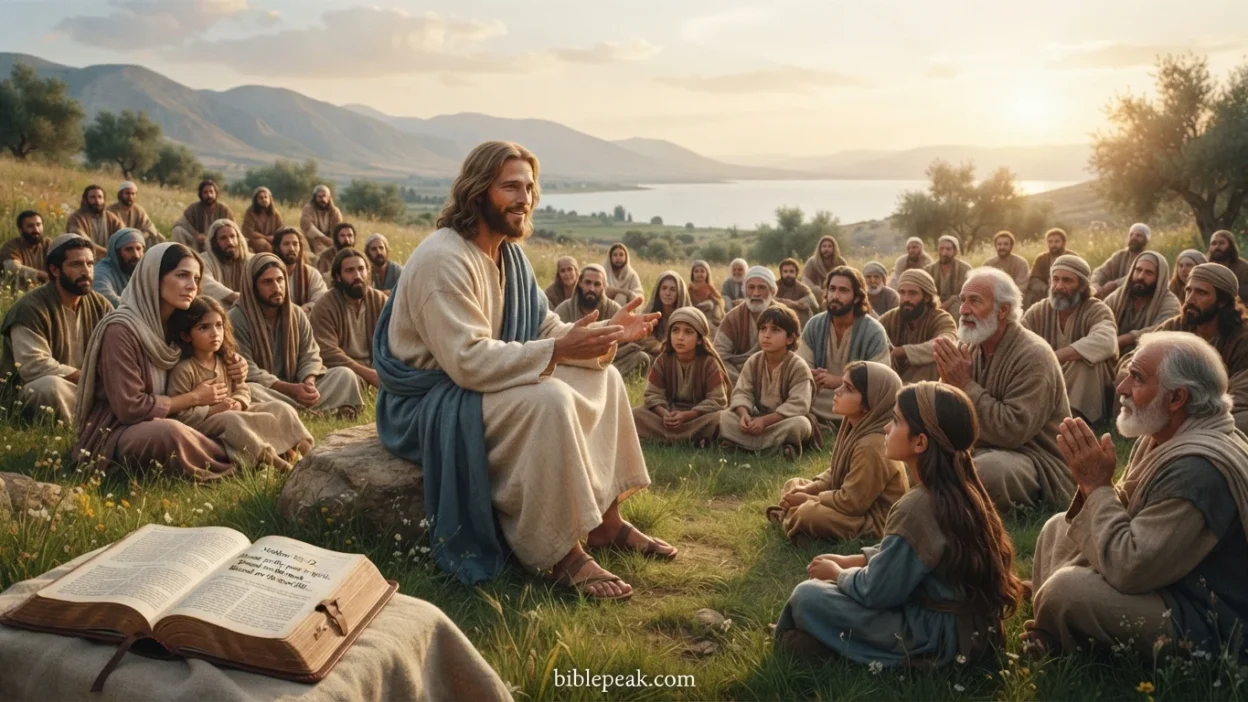
Imagine sitting quietly on a hillside while Jesus speaks to a crowd. His words are not loud or filled with pride. Instead, He speaks about the poor in spirit, those who mourn, the gentle, the merciful, and people who seek righteousness.
These teachings are known as the Beatitudes.
At first, some of Jesus’ words may seem surprising. He says that people who mourn can be blessed. He speaks of the meek as those who will inherit the earth. He even calls those who are persecuted for righteousness blessed.
So, what is the Beatitudes biblical meaning?
The Beatitudes are found at the beginning of Jesus’ Sermon on the Mount in Matthew 5:3–12. They show us what God values in a person’s heart. They teach that true blessing is not always about money, comfort, success, or an easy life.
Instead, Jesus points to humility, mercy, purity, peace, righteousness, and faith.
The Beatitudes give hope to people who feel weak, sad, rejected, or forgotten. They remind us that God sees the heart and that His kingdom has a different way of measuring a blessed life.
To understand their deeper meaning, we need to look at each teaching through the lens of Scripture and faith.
Biblical Meaning of the Beatitudes
The word Beatitudes refers to the blessings Jesus announced in Matthew 5:3–12. Each one begins with the idea of being “blessed.” This does not simply mean having an easy or happy life.
Biblical blessing points to a person who is favored by God and living under His care.
Blessed Are the Poor in Spirit
Jesus says, “Blessed are the poor in spirit, for theirs is the kingdom of heaven” (Matthew 5:3).
Being poor in spirit means knowing that we need God. It is not about having no value. It is about humility.
A person who is poor in spirit does not say, “I can do everything by myself.” Instead, they pray, “Lord, I need You.”
This is the beginning of a strong relationship with God.
Blessed Are Those Who Mourn
Matthew 5:4 says, “Blessed are those who mourn, for they shall be comforted.”
Mourning can come from loss, pain, sin, or a broken heart. Jesus does not ignore human sorrow.
God promises comfort to those who turn to Him. Psalm 34:18 says that the Lord is near to the brokenhearted.
This Beatitude gives hope to anyone walking through a painful season. Your tears do not make God distant.
Blessed Are the Meek
Jesus says, “Blessed are the meek, for they shall inherit the earth” (Matthew 5:5).
Meekness does not mean weakness. It describes a person who has strength but chooses humility, patience, and self-control.
The Bible teaches us to trust God instead of always fighting for our own way.
Meekness allows us to respond with grace instead of anger.
Blessed Are Those Who Hunger and Thirst for Righteousness
Matthew 5:6 speaks about people who deeply desire righteousness.
Just as the body needs food and water, the soul needs God.
This Beatitude teaches us to long for what is right and pleasing to God. It encourages spiritual growth, prayer, obedience, and a desire to live according to God’s Word.
Jesus promises that those who hunger and thirst for righteousness “shall be satisfied.”
Blessed Are the Merciful
Matthew 5:7 says, “Blessed are the merciful, for they shall receive mercy.”
Mercy means showing compassion when someone deserves judgment or punishment.
Christians are called to forgive, help, and show kindness because God has shown mercy to them.
This connects with Ephesians 4:32, which encourages believers to be kind, tenderhearted, and forgiving.
A heart that receives God’s mercy learns to give mercy to others.
Blessed Are the Pure in Heart
Jesus says, “Blessed are the pure in heart, for they shall see God” (Matthew 5:8).
Purity begins inside us. It includes our thoughts, motives, desires, and choices.
God does not only look at what people see. He looks at the heart.
This Beatitude encourages us to seek honesty and holiness rather than simply trying to look good before others.
Blessed Are the Peacemakers
Matthew 5:9 says, “Blessed are the peacemakers, for they shall be called sons of God.”
A peacemaker does not enjoy conflict. They seek healing, forgiveness, understanding, and reconciliation.
Being a peacemaker does not mean accepting wrong behavior. It means choosing a godly response instead of adding more anger.
Jesus calls peacemakers blessed because their actions reflect God’s heart.
Blessed Are Those Persecuted for Righteousness
The final Beatitudes speak about persecution.
Matthew 5:10 says that those who are persecuted for righteousness are blessed because the kingdom of heaven belongs to them.
Following Christ does not always bring an easy path. Sometimes faith brings rejection or hardship.
Jesus reminds believers that suffering for what is right is not meaningless. God sees their faithfulness.
Matthew 5:11–12 continues this message by encouraging believers to rejoice when they face persecution because their heavenly reward is great.
Spiritual Significance and Symbolism of the Beatitudes
The Beatitudes reveal a powerful picture of Christian character.
They teach that God’s blessings often begin where human pride ends. Instead of celebrating wealth, power, or popularity, Jesus highlights humility, mercy, purity, peace, and righteousness.
The Beatitudes also show a process of spiritual transformation.
A person first recognizes their need for God. They learn to depend on Him. They experience comfort, grow in righteousness, show mercy, seek purity, and become a peacemaker.
For example, imagine someone who is hurt by a friend. Their first reaction may be anger. But after prayer, they may choose forgiveness instead.
That simple choice can reflect the Beatitudes.
The same lesson applies when you feel weak, lonely, or misunderstood. God may be teaching you to depend on Him instead of your own strength.
The Beatitudes remind us that God sees what people cannot see. A quiet heart of faith may be more valuable in God’s eyes than a life that looks successful from the outside.
Biblical Interpretations of the Beatitudes in Dreams or Real Life
People may encounter the Beatitudes through Bible reading, prayer, sermons, dreams, or personal experiences.
If you dream about a peaceful mountain, helping someone, forgiving another person, mourning, or standing firm during hardship, you may connect these experiences with themes found in the Beatitudes.
However, the Bible does not teach that every dream has a direct divine message. Dreams should be tested carefully through Scripture, prayer, wisdom, and faith.
If a Beatitude keeps coming to your mind, consider what God may be teaching you through His Word.
Are you being called to show mercy? Do you need greater humility? Are you seeking peace? Are you going through suffering while trying to remain faithful?
Instead of fearing the experience, use it as an opportunity to pray and draw closer to God.
Practical Lessons and Faith Insights
The Beatitudes teach us to live differently from the world’s standards.
Be humble. Show mercy. Seek righteousness. Choose peace. Keep your heart pure. Trust God during suffering.
Take time to read Matthew 5:3–12 slowly. Ask God to show you which Beatitude speaks most strongly to your life today.
Conclusion
The Beatitudes biblical meaning is a beautiful message about what it means to live under God’s blessing. Jesus teaches that true blessing is found in humility, mercy, righteousness, purity, peace, and faithfulness.
The Beatitudes remind us that God sees our struggles and values a heart that seeks Him.
When life feels difficult, remember this: God’s blessing is not always found in an easy path. Sometimes it is found in walking faithfully with Him through every step.

Claire Ella is the Administrator of BiblePeak, overseeing content quality, website operations, and community engagement. She is dedicated to presenting coded Bible insights with accuracy, clarity, and integrity, ensuring every visitor enjoys a trustworthy, meaningful, and enriching experience.