
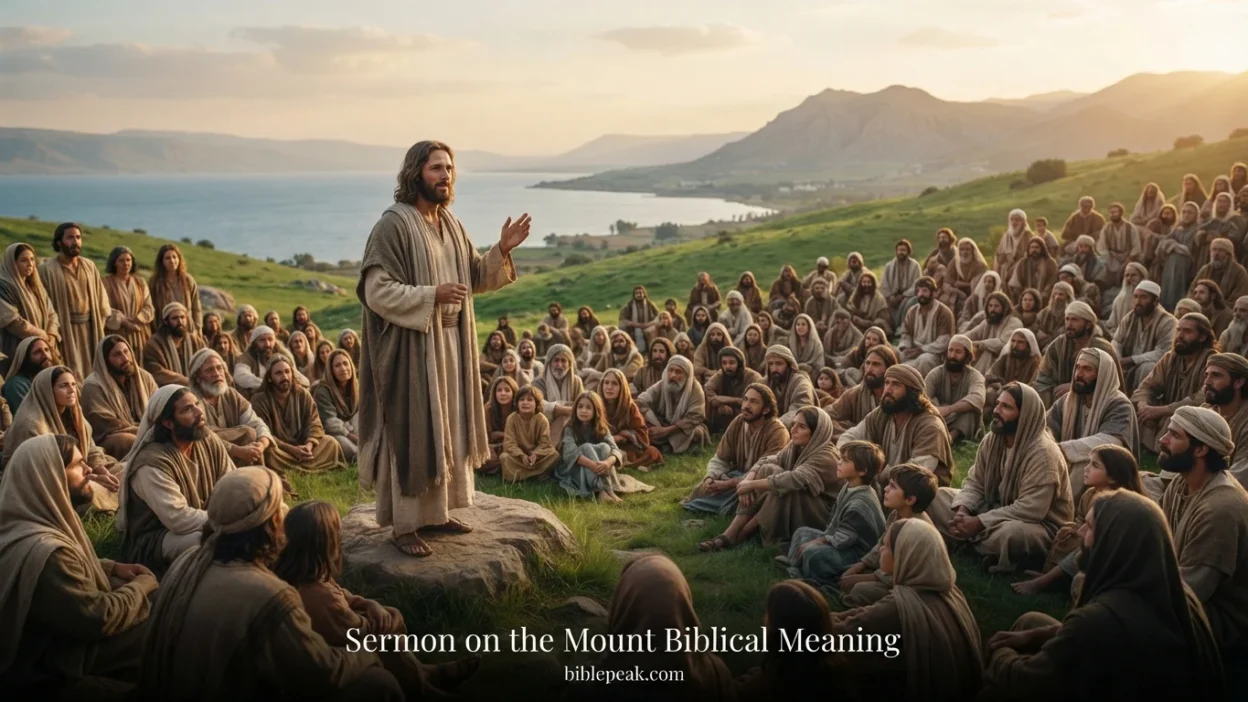
Imagine sitting quietly on a hillside while Jesus speaks to a crowd. The air is calm. People listen closely. His words are simple, but they reach deep into the heart. He talks about being humble, showing mercy, loving others, praying, forgiving, and trusting God.
This powerful teaching is known as the Sermon on the Mount.
The Sermon on the Mount is one of the most important teachings of Jesus in the Bible. It is found mainly in Matthew chapters 5–7. It begins with the Beatitudes and continues with lessons about prayer, love, forgiveness, purity, worry, judging others, and building life on God’s truth.
So, what is the Sermon on the Mount biblical meaning?
At its heart, it teaches what life looks like when a person truly follows God. Jesus shows that faith is not only about what we say. It is also about what is inside our hearts and how we treat other people.
The Sermon on the Mount gives a picture of Christian character, spiritual growth, obedience, and trust in God. It calls believers to live with love, mercy, humility, honesty, and faith.
Its message is not meant to create fear. It points us toward a deeper relationship with God and a life shaped by His truth.
Biblical Meaning of the Sermon on the Mount
The Sermon on the Mount biblical meaning is closely connected to the way Jesus calls His followers to live. It teaches that God cares about both our actions and our hearts.
Jesus begins with the Beatitudes in Matthew 5:3–12. He speaks about alternative in spirit, those who mourn, the meek, the merciful, the pure in heart, and those who seek righteousness.
These verses show that God sees people who may feel weak, broken, or forgotten. Jesus gives them hope.
For example, Matthew 5:8 says, “Blessed are the pure in heart: for they shall see God.” This teaches that a sincere heart matters deeply before God.
A Call to Righteous Living
Jesus teaches that true righteousness goes deeper than outward actions.
In Matthew 5:21–22, He teaches about anger. In Matthew 5:27–28, He speaks about purity of heart. These teachings show that God looks beyond what people can see.
The message is clear: faith begins inside the heart and becomes visible through our lives.
Jesus also teaches His followers to love their enemies.
Matthew 5:44 says, “Love your enemies, bless them that curse you, do good to them that hate you.”
This is one of the strongest lessons in the Sermon on the Mount. Christian love is not limited to people who treat us well. Jesus calls His followers to respond with grace instead of revenge.
A Call to Mercy and Forgiveness
The Sermon on the Mount also teaches forgiveness.
Jesus gives the Lord’s Prayer in Matthew 6:9–13. This prayer reminds believers to seek God’s will, daily provision, forgiveness, and protection.
Matthew 6:14–15 connects forgiveness with our relationship with others. The teaching encourages believers not to hold tightly to anger and bitterness.
This does not mean that pain is unimportant. Instead, it teaches that forgiveness can release the heart from the burden of hatred.
A Call to Trust God
Another major theme is trusting God.
In Matthew 6:25–34, Jesus tells His followers not to live consumed by worry. He points to birds and flowers as reminders of God’s care.
Matthew 6:33 says, “Seek ye first the kingdom of God, and his righteousness.”
This verse gives a powerful spiritual message. Instead of allowing fear to control our lives, we are called to seek God first.
The Sermon on the Mount does not promise that life will never be difficult. It teaches us where to place our trust when difficulties come.
Building Life on God’s Word
At the end of the sermon, Jesus gives the picture of two builders.
One builds a house on rock. The other builds on sand. When storms come, the house on rock stands firm (Matthew 7:24–27).
This is a beautiful picture of spiritual strength.
The rock represents hearing Jesus’ words and putting them into practice. The lesson is simple: faith becomes strong when we live what we believe.
Spiritual Significance and Symbolism
The spiritual symbolism of the Sermon on the Mount points toward inner transformation.
Jesus does not simply tell people to look religious. He calls them to become different from the inside.
A person may pray, but Jesus teaches that prayer should be sincere. A person may give to others, but the gift should come from a humble heart. A person may face enemies, but Jesus teaches love instead of hatred.
This gives the Sermon on the Mount a strong message about heart transformation.
A Picture of a Changed Heart
The teachings of Jesus can become a guide for daily Christian life.
If you are struggling with anger, the sermon reminds you to seek peace.
If you are worried about tomorrow, it reminds you to trust God.
If someone has hurt you, it points you toward forgiveness.
If you feel lost, it encourages you to seek God’s kingdom.
These lessons connect faith with everyday life.
The Sermon on the Mount also teaches humility. Matthew 7:3–5 warns against focusing on another person’s faults while ignoring our own.
This encourages honest self-reflection.
Before judging someone else, we can ask, “Lord, what do You want to change in me?”
That simple prayer can open the door to spiritual growth.
Biblical Interpretations in Dreams or Real Life
Some people may dream about Jesus teaching on a mountain, hear a sermon that reminds them of His words, or feel strongly drawn to Matthew 5–7.
From a Christian perspective, such an experience can become an opportunity for prayer and reflection. The Bible does not give one fixed meaning for every dream involving the Sermon on the Mount.
A peaceful dream may remind someone of God’s call to humility, mercy, or trust. A troubling experience may encourage a person to examine areas such as anger, worry, unforgiveness, or pride.
Rather than assuming every dream is a direct divine message, it is wise to compare the experience with Scripture and prayer.
The main biblical message remains steady: follow Christ, seek God’s kingdom, love others, forgive, pray sincerely, and build your life on His teachings.
Conclusion
The Sermon on the Mount biblical meaning centers on a life transformed by Jesus. It teaches humility, mercy, love, forgiveness, prayer, righteousness, and trust in God.
Its message is both challenging and hopeful. Jesus calls us to live differently, but He also reminds us that God sees, cares, and guides His people.
As you reflect on Matthew 5–7, let its words lead you closer to God. Seek His kingdom, trust His wisdom, and let your faith shape the way you live each day.

Claire Ella is the Administrator of BiblePeak, overseeing content quality, website operations, and community engagement. She is dedicated to presenting coded Bible insights with accuracy, clarity, and integrity, ensuring every visitor enjoys a trustworthy, meaningful, and enriching experience.