
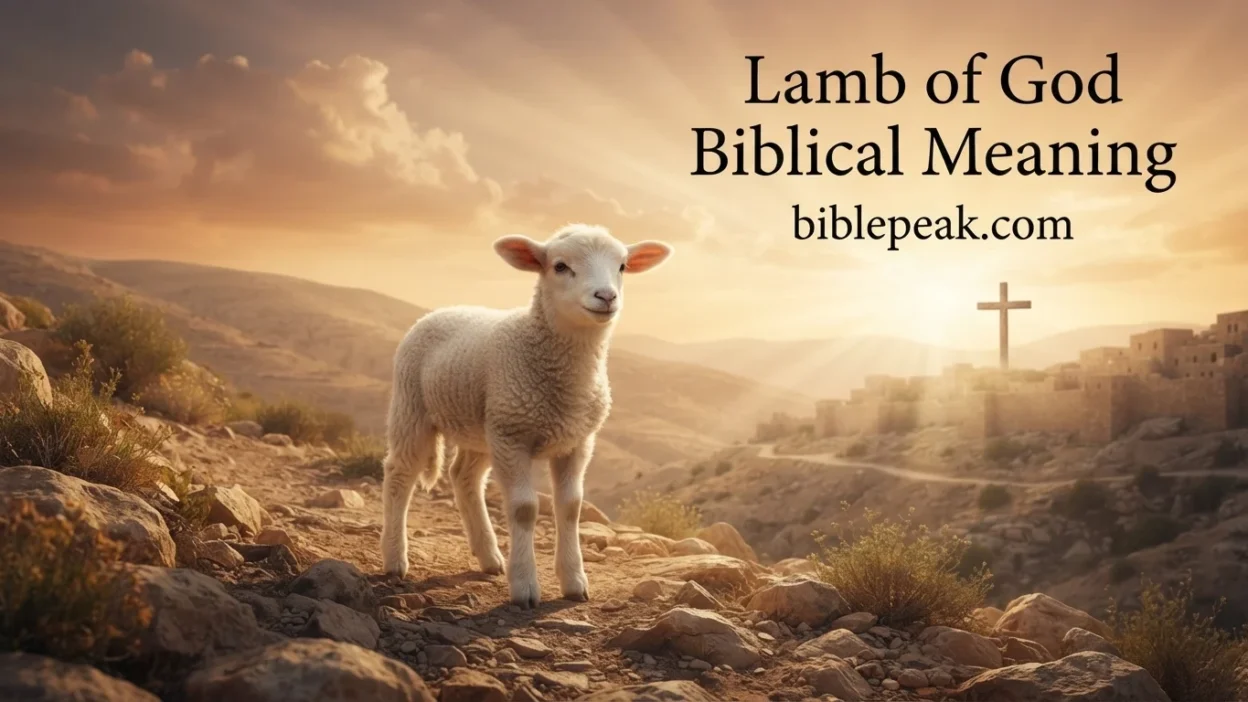
Imagine standing in a quiet field at sunrise. The air is still, and you see a gentle lamb nearby. It looks small, peaceful, and innocent. Yet in the Bible, a lamb carries a much deeper meaning.
The phrase Lamb of God is one of the most beautiful names given to Jesus Christ. It speaks of love, sacrifice, forgiveness, redemption, and salvation. When Christians read about the Lamb of God, they are reminded of what Jesus did for humanity and the hope found through Him.
But what does the Lamb of God biblical meaning truly teach us?
The Bible uses the image of a lamb to show innocence and sacrifice. In the Old Testament, lambs were offered as sacrifices for sin. These sacrifices pointed forward to something greater. In the New Testament, John the Baptist identified Jesus with these powerful words:
“Behold! The Lamb of God who takes away the sin of the world!” — John 1:29
This verse helps us understand the heart of the symbol. Jesus came to take away sin and bring people back to God.
The Lamb of God is not only a picture of suffering. It is also a picture of hope, grace, peace, and new life. Let us explore what this powerful biblical symbol means for Christian faith and daily life.
Biblical Meaning of the Lamb of God
The Lamb of God biblical meaning is closely connected to Jesus Christ and His sacrifice for sin. The lamb represents innocence, surrender, and a sacrifice made for others.
Jesus as the Lamb of God
John the Baptist called Jesus the Lamb of God when he saw Him coming toward him.
“Behold! The Lamb of God who takes away the sin of the world!” — John 1:29
This was a powerful statement. John was pointing people toward Jesus as the One who would deal with the problem of sin.
Jesus was without sin, yet He willingly gave His life for sinners. 1 Peter 1:18–19 describes believers as redeemed “with the precious blood of Christ, as of a lamb without blemish and without spot.”
The image shows the deep love of God. Jesus did not give His life because He had done wrong. He gave Himself for others.
The Lamb and Old Testament Sacrifice
The meaning becomes clearer when we look at the Old Testament.
In Exodus 12, God commanded the Israelites to use a lamb during the Passover. The blood of the lamb was placed on the doorposts. When judgment came over Egypt, the houses marked by the blood were passed over.
The Passover lamb became a powerful picture of protection and deliverance.
Later, the Old Testament also describes sacrifices made for sin. These sacrifices showed that sin was serious and that forgiveness came at a cost.
These practices pointed toward Christ. Jesus became the greater and final sacrifice. 1 Corinthians 5:7 says:
“For indeed Christ, our Passover, was sacrificed for us.”
The Lamb of God therefore connects the story of the Old Testament with the salvation offered through Jesus.
A Symbol of Innocence
A lamb is often seen as gentle and innocent. This makes it a fitting picture of Jesus.
Jesus lived without sin. 1 Peter 2:22 says that He “committed no sin, nor was deceit found in His mouth.”
This teaches an important Christian truth: salvation is not something people earn by being perfect. It comes through God’s grace and the sacrifice of Christ.
When someone feels ashamed because of past mistakes, the Lamb of God points toward forgiveness and restoration.
A Symbol of Sacrifice
The lamb also represents sacrifice.
Jesus willingly gave His life on the cross. Isaiah 53:7 describes the suffering servant as being led “as a lamb to the slaughter.”
This prophecy is understood by Christians as pointing toward Christ’s suffering.
The cross shows that God’s love is not empty words. It is love expressed through sacrifice.
A Symbol of Salvation and Hope
The Lamb of God does not only remind Christians of the cross. It also points to victory.
In Revelation 5, Jesus is pictured as the Lamb who is worthy to open the scroll. The Lamb appears in a position of great honor and authority.
This creates a beautiful biblical picture: the Lamb who suffered is also the victorious King.
Jesus’ death was not the end. His resurrection brought hope and new life.
So, the biblical symbolism of the Lamb includes:
- Sacrifice — Jesus gave Himself for sinners.
- Forgiveness — His sacrifice points to God’s grace.
- Redemption — believers are bought back for God.
- Protection — the Passover story points to deliverance.
- Hope — Christ’s resurrection gives new life.
- Victory — Revelation presents the Lamb as reigning with God.
Spiritual Significance and Symbolism
The Lamb of God carries a deep spiritual message for anyone walking with Christ.
It Teaches Us About God’s Love
The Lamb reminds us that God’s love is personal and costly. John 3:16 teaches that God loved the world and gave His Son so that believers could have eternal life.
When life feels lonely, this truth can bring comfort. You are not forgotten by God.
It Teaches Humility
Jesus did not choose pride or earthly power. He willingly served and suffered.
Philippians 2:8 says that Christ humbled Himself and became obedient to the point of death.
For Christians, the Lamb becomes an example of humility, obedience, and love.
It Brings Hope After Failure
Everyone makes mistakes. Sometimes guilt can make a person feel far from God.
The Lamb of God reminds Christians that Christ came to deal with sin. 1 John 1:9 says that God is faithful to forgive those who confess their sins.
This does not mean sin should be ignored. Instead, it means failure does not have to be the end of the story.
It Points Toward Transformation
Following Jesus means more than knowing about Him. It means allowing His love to change your life.
The Lamb can remind you to become more loving, forgiving, humble, and faithful.
A simple prayer can begin that journey:
“Lord Jesus, help me trust Your grace and follow You with a humble heart.”
Biblical Interpretations in Dreams or Real Life
Some people may dream about a lamb or notice lamb imagery during a meaningful season of life. In Christian dream interpretation, a lamb may remind someone of innocence, sacrifice, peace, forgiveness, or Jesus Christ.
A peaceful white lamb might personally remind someone of God’s peace or Christ’s purity. A lamb being cared for might bring thoughts of God’s loving care.
A wounded lamb could remind someone of sacrifice, suffering, or the need for healing. A lamb in a frightening setting may lead a person to reflect on fear, faith, and the need to seek God’s protection.
However, the Bible does not teach that every dream contains a divine message. Christians should avoid treating every dream as prophecy.
Instead, test what you experience through Scripture, prayer, and wise Christian counsel. The central biblical message remains clear: Jesus is the Lamb of God who brings salvation and hope.
Practical Lessons & Faith Insights
The Lamb of God invites us to trust Jesus, receive His grace, forgive others, and walk in humility. When you feel guilty, remember God’s mercy. When you feel afraid, pray. When you feel lost, return to Scripture. Let Christ’s sacrifice remind you that God’s love offers hope, forgiveness, and a new beginning.
Conclusion
The Lamb of God biblical meaning points to Jesus Christ, His sacrifice, His love, and His victory over sin and death. From the Passover lamb to Revelation’s victorious Lamb, Scripture presents a powerful story of redemption and hope.
If you are seeking God’s guidance today, remember the Lamb. Jesus gave Himself in love so that you could draw near to God. Trust His grace, follow His light, and hold on to hope.

Claire Ella is the Administrator of BiblePeak, overseeing content quality, website operations, and community engagement. She is dedicated to presenting coded Bible insights with accuracy, clarity, and integrity, ensuring every visitor enjoys a trustworthy, meaningful, and enriching experience.