Imagine walking into a quiet place where everything feels still. The noise fades. Your heart becomes calm. You remember that God is near.
In the Bible, the temple was much more than a building. It was a special place connected with the presence of God, worship, prayer, holiness, and fellowship with Him. For God’s people, the temple reminded them that the Lord was not distant. He desired to dwell among His people.
This makes the temple an important biblical symbol. If you have read about the temple in Scripture, dreamed about a temple, or wondered about its spiritual meaning, you may ask, “What does the temple mean in the Bible?”
The answer points to something beautiful. The temple teaches us about God’s holy presence and His desire to live among His people.
The Bible also shows that the meaning of the temple develops over time. The Old Testament temple was a physical place of worship. In the New Testament, Jesus becomes central to God’s dwelling among humanity, and believers themselves are described as temples of the Holy Spirit.
Understanding the temple biblical meaning can help us see God’s presence in a deeper way and remind us that true worship is not only about a place. It is about a heart that belongs to God.
Biblical Meaning of Temple
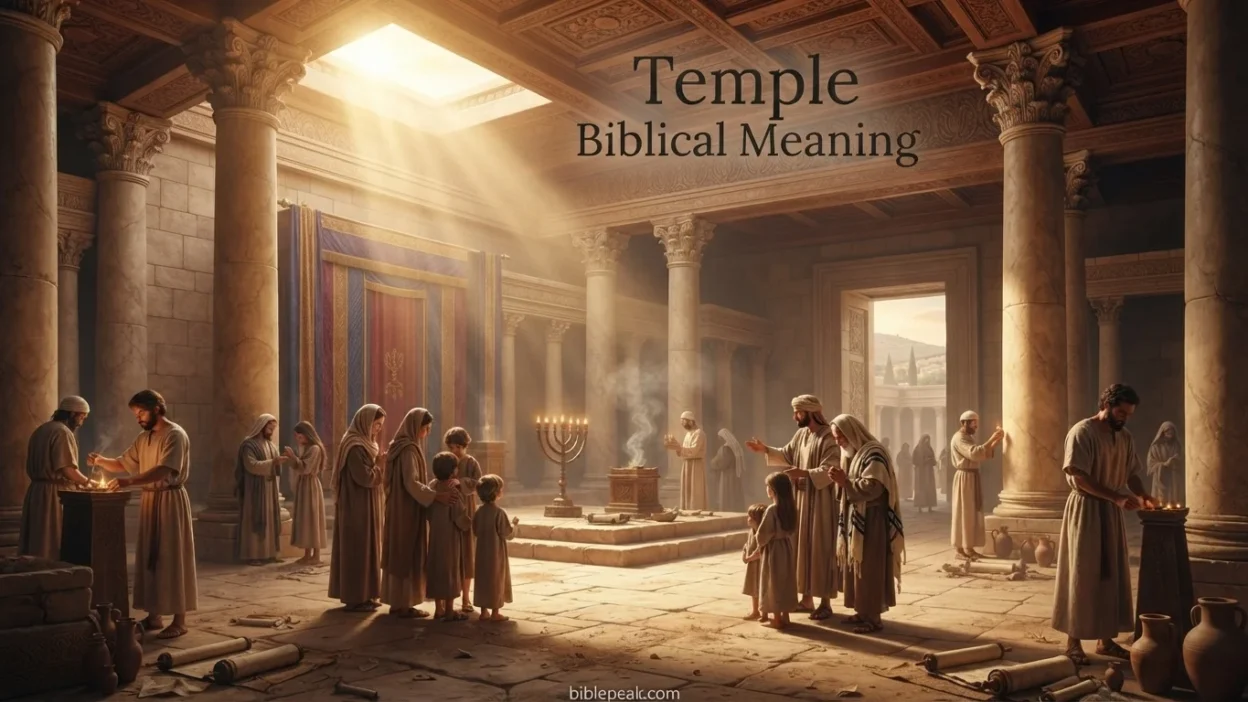
The primary biblical meaning of the temple is the dwelling place of God’s presence among His people. It was a sacred place where people worshiped God, offered sacrifices, prayed, and remembered His holiness.
One of the clearest examples is Solomon’s Temple in Jerusalem. When Solomon dedicated the temple, God’s glory filled the house. 1 Kings 8:10–11 describes how the priests could not continue ministering because the glory of the Lord filled the temple.
This shows that the temple represented the presence and glory of God.
The Temple Represents God’s Presence
Throughout Scripture, God wanted His people to understand that He was with them.
In Exodus 25:8, God said, “Let them make me a sanctuary; that I may dwell among them.”
The temple was therefore a powerful picture of God dwelling among His people.
It gave Israel a place where they could worship and remember their relationship with the Lord. The temple was holy because God was holy.
For Christians today, this meaning carries a deeper message. God’s presence is not limited to a building. Through Christ, believers can have a close relationship with God wherever they are.
The Temple Represents Holiness
The temple was also connected with holiness.
The priests, sacrifices, furnishings, and worship practices all pointed to the holiness of God. People could not treat the temple as an ordinary place.
This teaches an important spiritual lesson: God is worthy of reverence.
The temple biblical symbolism reminds us to approach God with humility. It also encourages believers to live lives that honor Him.
The Temple Represents Worship
The temple was a center of worship for God’s people. Songs were offered. Prayers were lifted. Sacrifices were made.
Psalm 84 expresses the deep desire of God’s people to be near His dwelling place. The writer says, “How amiable are thy tabernacles, O Lord of hosts!”
The temple therefore represents a heart that longs for God.
True worship is not only singing or attending a church service. It is giving God our love, trust, obedience, and attention.
Jesus and the Temple
The meaning of the temple becomes even deeper in the New Testament.
Jesus spoke about His body in connection with the temple. In John 2:19–21, Jesus said, “Destroy this temple, and in three days I will raise it up.” John explains that Jesus was speaking about the temple of His body.
This points to an important Christian belief: Jesus is the place where God’s presence is revealed to humanity in a unique way.
Through Jesus, people can come near to God.
Believers as the Temple of the Holy Spirit
Perhaps one of the most powerful temple meanings for Christians appears in 1 Corinthians 6:19:
“Your body is the temple of the Holy Ghost.”
This changes how we understand the temple. God’s presence is not only connected with a historical building. Believers are called to live as people who belong to God.
This means our lives should reflect holiness, love, faith, and obedience.
The temple can therefore symbolize a life that is being transformed by God.
A Warning About the Temple
The Bible also gives a warning. Jesus strongly confronted people who misused the temple for selfish purposes.
In Matthew 21:12–13, Jesus cleansed the temple and reminded the people that God’s house was meant to be a house of prayer.
This teaches us that sacred things should not be treated carelessly.
The temple biblical meaning is therefore both comforting and challenging. It reminds us of God’s presence while calling us to respect Him, seek Him, and live faithfully.
Spiritual Significance and Symbolism
The spiritual symbolism of the temple points to God’s presence, relationship, holiness, worship, and transformation.
For someone walking through a difficult season, the temple can remind them that God is near. You may not feel His presence every moment, but faith teaches you to trust His promises.
The temple also represents a place of meeting with God. In daily life, this can encourage you to create quiet moments for prayer and Scripture reading.
You do not need a special building to talk to God.
You can pray in your room. You can worship while walking. You can seek God during a difficult day. Your heart can become a place where you intentionally turn toward Him.
The temple also speaks about spiritual awakening. When God changes your heart, your priorities begin to change. You may become more patient, forgiving, loving, and willing to follow His guidance.
A simple example is someone who feels angry after being hurt. Instead of responding with bitterness, they stop and pray. They ask God for wisdom and choose forgiveness. That small decision can become part of spiritual transformation.
The temple reminds us that God does not only want our attention on Sunday. He wants our whole lives.
Biblical Interpretations in Dreams or Real Life
If you dream about a temple, the meaning should be approached carefully. The Bible does not give one universal meaning for every dream involving a temple.
A beautiful or peaceful temple may remind you of God’s presence, worship, peace, or a desire to draw closer to Him.
A damaged or empty temple might lead you to reflect on spiritual neglect, brokenness, or an area of life that needs restoration. However, it should not automatically be treated as a divine prediction.
A temple filled with light may naturally remind a Christian of God’s glory and holiness.
If the dream feels frightening, confusing, or troubling, prayer and Scripture are better guides than fear.
The key is not to chase a dream interpretation. Instead, ask, “What does Scripture teach me about God, and how can I grow closer to Him?”
God’s guidance will never require you to abandon biblical truth.
Practical Lessons & Faith Insights
The temple teaches us to seek God’s presence, honor His holiness, and make worship part of daily life.
Take time to pray. Read Scripture. Examine your heart. Ask God to transform the areas that need healing and growth. Remember that your life can reflect God’s presence through love, obedience, kindness, and faith.
Conclusion
The temple biblical meaning points to God’s presence, holiness, worship, and relationship with His people. From the Old Testament temple to the New Testament teaching that believers are temples of the Holy Spirit, the message is clear: God desires to dwell with His people.
When you seek Him with a sincere heart, remember that you are never truly alone. Let your life become a place of worship, and trust God to guide your steps with peace and hope.

William Tyler is a passionate Christian writer at BiblePeak, dedicated to exploring the hidden meanings, biblical codes, Scripture insights, prophecy, and faith-based teachings. His mission is to help readers better understand God’s Word through clear, accurate, and inspiring biblical content.