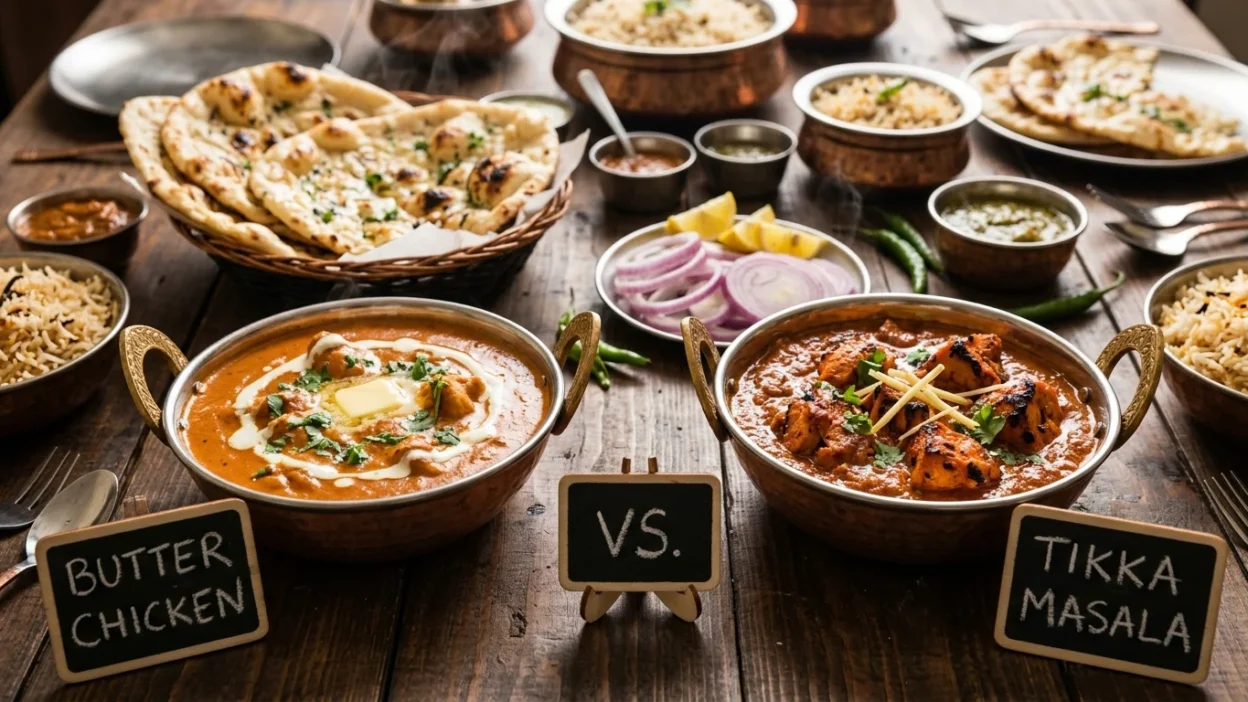
Butter chicken and chicken tikka masala are two popular Indian-style chicken dishes. Both feature tender chicken pieces in a rich, tomato-based sauce, and both are often served with rice or naan. However, they differ in flavor, texture, ingredients, and culinary history.
The main difference is that butter chicken is usually creamy, buttery, and mildly sweet, while chicken tikka masala often has a stronger tomato flavor and a bolder blend of spices. Butter chicken is traditionally associated with North Indian cuisine, especially Delhi. Chicken tikka masala is widely associated with British Indian cuisine, although its exact origin is debated. Both dishes have many regional and restaurant variations, so their flavors can overlap.
If you are choosing between them at a restaurant, your preference matters most. Butter chicken is a great option if you enjoy a smooth, rich sauce. Tikka masala may suit you better if you want a more pronounced spice blend and a slightly tangier taste.
Quick Answer
Butter chicken is a creamy, buttery chicken curry made with tomato, butter, cream, and spices. Chicken tikka masala features marinated, often grilled chicken in a spiced tomato-based sauce that may contain cream. Butter chicken is generally smoother and richer, while tikka masala often tastes tangier and more boldly spiced.
Why Do People Confuse Butter Chicken and Tikka Masala?
People often confuse these dishes because they share many ingredients and cooking methods.
Both dishes commonly include:
- Chicken marinated with yogurt and spices.
- Tomatoes or tomato-based sauce.
- Garlic, ginger, and warming spices.
- Cream or another ingredient that adds richness.
- Rice, naan, or other Indian-style side dishes.
Their appearance can also be similar. Both may have an orange or reddish sauce, tender chicken, and a creamy finish.
The biggest differences are the traditional preparation, balance of flavors, and cooking style. Butter chicken is known for its buttery, smooth sauce. Tikka masala typically highlights marinated chicken tikka and a more pronounced mixture of spices.
However, no single recipe represents every restaurant or household. Some butter chicken recipes are tangy, and some tikka masala recipes are very creamy.
1. Butter Chicken: Meaning, Taste, and Uses
What Is Butter Chicken?
Butter chicken, also called murgh makhani, is a chicken dish associated with Delhi, India. It became famous for its tender chicken and rich, tomato-based sauce made with butter and often cream.
The dish is commonly linked to the culinary traditions of the Moti Mahal restaurant in Delhi.
What Does Butter Chicken Taste Like?
Butter chicken usually has a rich, smooth, and mildly sweet flavor. Butter and cream soften the acidity of the tomatoes, while spices add warmth without always making the dish very hot.
Common ingredients include:
- Chicken, sometimes cooked in a tandoor or grilled.
- Tomatoes or tomato puree.
- Butter and cream.
- Ginger and garlic.
- Garam masala and other spices.
- Dried fenugreek leaves in many recipes.
The final sauce is often velvety and easy to enjoy with rice or naan.
When Should You Choose Butter Chicken?
Choose butter chicken if you prefer:
- A creamy and buttery sauce.
- Mild, balanced flavors.
- Tender chicken in a smooth curry.
- A dish that pairs well with naan or basmati rice.
- A rich meal without an especially sharp tomato flavor.
Butter chicken is a popular starting point for people exploring Indian-style curries, although its spice level depends on the recipe.
2. Tikka Masala: Meaning, Taste, and Uses
What Is Chicken Tikka Masala?
Chicken tikka masala is a dish made with chicken tikka, which consists of marinated chicken pieces that are commonly grilled or roasted, served in a seasoned sauce.
The sauce often contains tomatoes, onions, garlic, ginger, and a blend of spices. Some versions include cream, yogurt, or butter.
Chicken tikka masala is especially popular in the United Kingdom and is widely associated with British Indian restaurant cuisine. Its exact origin remains disputed.
What Does Tikka Masala Taste Like?
Chicken tikka masala often has a tangy tomato flavor and a noticeable blend of spices. The grilled chicken may add a smoky taste, while cream can make the sauce rich and smooth.
Common ingredients include:
- Yogurt-marinated chicken.
- Tomatoes and onions.
- Garlic and ginger.
- Garam masala, cumin, coriander, and paprika in many recipes.
- Cream or another source of richness, depending on the recipe.
Some versions are mild and creamy, while others are spicy and robust.
When Should You Choose Tikka Masala?
Choose chicken tikka masala if you prefer:
- A stronger tomato flavor.
- A more pronounced spice blend.
- Chicken with a grilled or smoky character.
- A rich curry with layers of flavor.
- A dish that balances tanginess, spices, and cream.
Ask the restaurant about its recipe if you prefer a specific heat level or want to avoid certain ingredients.
Butter Chicken vs Tikka Masala: Comparison Table
| Feature | Butter Chicken | Chicken Tikka Masala |
| Common name | Murgh makhani | Chicken tikka masala |
| Culinary association | North India, especially Delhi | British Indian cuisine; exact origin debated |
| Main sauce | Tomato, butter, and often cream | Tomato, spices, and often cream |
| Typical flavor | Buttery, creamy, mildly sweet | Tangy, richly spiced, sometimes smoky |
| Texture | Often smooth and velvety | Often thicker or more textured, depending on the recipe |
| Chicken preparation | May be grilled, roasted, or cooked in the sauce | Usually uses marinated chicken tikka, commonly grilled or roasted |
| Spice level | Often mild to medium | Mild to hot, depending on the recipe |
| Tomato flavor | Often balanced by butter and cream | Often more pronounced |
| Sweetness | Frequently has a gentle sweetness | Usually emphasizes savory spices and tanginess |
| Best for | People who enjoy rich, mellow curries | People who enjoy bolder, layered flavors |
| Common sides | Naan and basmati rice | Naan and basmati rice |
These are typical differences, not strict rules. Recipes vary by cook, region, and restaurant.
When to Use Each Dish
You do not use these dish names interchangeably when ordering because they describe different recipes, even though they share ingredients.
Choose Butter Chicken When…
- You want a rich, buttery curry.
- You prefer a smooth sauce with balanced tomato acidity.
- You enjoy mild, creamy flavors.
- You want a comforting meal with naan or rice.
Example: “I’ll order butter chicken because I prefer a creamy sauce with a mild, rich flavor.”
Choose Chicken Tikka Masala When…
- You enjoy a stronger blend of spices.
- You prefer a tangier tomato sauce.
- You like the flavor of grilled or roasted chicken.
- You want a curry with a bold, savory taste.
Example: “I’ll try chicken tikka masala because I enjoy smoky chicken and a tangy sauce.”
12 Examples of Butter Chicken vs Tikka Masala
Here are practical examples to help you understand the differences.
- At a restaurant: “I’ll have butter chicken because I prefer a rich, creamy curry.”
- Ordering a bolder dish: “Chicken tikka masala sounds better because I enjoy strong spices.”
- Choosing a mild meal: “Butter chicken is my first choice because I like mellow flavors.”
- Enjoying grilled chicken: “I’ll order tikka masala because I like the taste of roasted chicken.”
- Pairing with naan: “Both butter chicken and tikka masala taste delicious with fresh naan.”
- Serving with rice: “We can serve butter chicken with basmati rice for a comforting dinner.”
- Cooking at home: “I’m making butter chicken with tomato puree, butter, cream, and spices.”
- Preparing a tangy curry: “I’m making tikka masala with grilled chicken and a seasoned tomato sauce.”
- Comparing sauces: “The butter chicken sauce tastes buttery, while the tikka masala sauce tastes more tangy.”
- Choosing for guests: “I’ll serve both dishes so everyone can choose their favorite flavor.”
- Discussing spice: “Tikka masala can be spicy, but the heat depends on the recipe.”
- Explaining the difference: “Butter chicken emphasizes buttery richness, while tikka masala often emphasizes tangy, spiced flavor.”
Common Mistakes When Comparing Butter Chicken and Tikka Masala
Mistake 1: Thinking They Are the Same Dish
They share ingredients, but their traditional preparations and flavor profiles are different.
Better understanding: Butter chicken emphasizes buttery richness, while tikka masala highlights marinated chicken and a pronounced spice blend.
Mistake 2: Assuming Tikka Masala Is Always Hotter
Tikka masala can have a bold flavor without being very hot. Restaurants can adjust the amount of chili.
Better understanding: Ask about the heat level rather than judging it by the name.
Mistake 3: Thinking Butter Chicken Never Contains Spice
Butter chicken includes spices, even when the finished dish tastes mild.
Better understanding: Mild does not mean spice-free.
Mistake 4: Assuming Both Sauces Have the Same Ingredients
Recipes overlap, but the quantities and combinations can differ.
Better understanding: Check the ingredients when cooking or ordering, especially if you have food allergies or dietary restrictions.
Mistake 5: Believing Every Recipe Follows One Rule
Family recipes and restaurant versions can vary considerably.
Better understanding: Use the usual flavor profile as a guide, not an absolute rule.
Memory Trick: How to Remember the Difference
Use this simple memory trick:
- Butter chicken = buttery and mellow.
- Tikka masala = tikka pieces with a bold masala sauce.
Think of butter chicken as the rich, smooth option and tikka masala as the tangy, spice-forward option.
This is a useful shortcut, although both dishes can be creamy, spicy, or mildly sweet.
American vs British English
The names butter chicken and chicken tikka masala are widely understood in both American and British English.
The main difference is not spelling or grammar. It is the food culture in which the dishes are commonly discussed.
- American English: Both dishes appear on Indian restaurant menus in the United States. Menus may describe their sauce, heat level, or ingredients.
- British English: Chicken tikka masala is especially familiar in British Indian restaurant culture and is often discussed as a well-known British curry.
The phrase chicken tikka refers to marinated chicken pieces, while masala generally refers to a spice mixture or a spiced preparation. The precise meaning depends on the culinary context.
Neither dish has a different standard name simply because you are speaking American or British English.
Similar Words and Related Dishes
These dishes are related, but they are not identical.
Chicken Tikka
Chicken tikka consists of marinated chicken pieces that are commonly cooked in a tandoor, grilled, or roasted. It can be served without the creamy curry sauce associated with tikka masala.
Tandoori Chicken
Tandoori chicken is typically marinated in yogurt and spices, then cooked in a tandoor or another suitable oven or grill. It is often served as a roasted chicken dish rather than a tomato-based curry.
Chicken Korma
Chicken korma is generally a mild, rich curry that may use yogurt, cream, nuts, or other ingredients, depending on the recipe. Its flavor profile differs from both butter chicken and tikka masala.
Chicken Curry
Chicken curry is a broad term for many chicken dishes cooked with seasoned sauces or gravies. It does not refer to one specific recipe.
Paneer Butter Masala
Paneer butter masala uses paneer, an Indian cheese, in a rich tomato-based sauce. It shares some flavors with butter chicken but does not contain chicken in its traditional form.
Final Verdict: Which Is Better?
Neither butter chicken nor chicken tikka masala is universally better. The best choice depends on your taste.
Choose butter chicken if you love a creamy, buttery sauce with a mild, balanced flavor. Choose chicken tikka masala if you prefer a tangier tomato sauce, a stronger spice blend, and the flavor of grilled chicken.
If you are unsure, try both with naan or basmati rice. Comparing them side by side is an easy way to discover which flavor profile you enjoy more.
FAQs
1. Is butter chicken the same as chicken tikka masala?
No. Both are chicken dishes with tomato-based sauces, but butter chicken usually emphasizes butter and cream, while tikka masala often has a more pronounced spice blend and tangy flavor.
2. Which is creamier, butter chicken or tikka masala?
Butter chicken is generally known for its buttery, creamy texture. However, some tikka masala recipes also contain plenty of cream, so the difference depends on the recipe.
3. Which dish is spicier?
Chicken tikka masala may taste more boldly spiced, but it is not always hotter. Both dishes can be prepared mild, medium, or hot.
4. Which is sweeter, butter chicken or tikka masala?
Butter chicken often has a mildly sweet flavor because of its tomato sauce and rich ingredients. Tikka masala usually emphasizes tanginess and savory spices, although recipes vary.
5. Which dish is better for beginners?
Butter chicken is often a good starting point for people who prefer creamy, mild flavors. However, a mild tikka masala can also be beginner-friendly.
6. Does chicken tikka masala contain cream?
Many recipes contain cream, but not all do. Some use yogurt or other ingredients to create a rich sauce. Check the recipe or restaurant menu for exact ingredients.
7. Which dish is healthier?
Neither dish is automatically healthier. Nutrition depends on portion size, the amount of butter or cream, cooking methods, and the ingredients used. Compare the nutrition information when available.
8. Can I eat butter chicken or tikka masala with rice?
Yes. Both dishes pair well with basmati rice, naan, and other suitable sides. Rice is a good choice if you want to enjoy the sauce without bread.
Remember This
- Butter chicken: Rich, buttery, creamy, and often mildly sweet.
- Chicken tikka masala: Tangy, richly spiced, and often made with grilled or roasted chicken.
- Both: Popular chicken dishes with tomato-based sauces that pair well with rice and naan.
Conclusion
Butter chicken and chicken tikka masala may look similar, but they offer different flavor experiences. Butter chicken is known for its creamy, buttery sauce, while tikka masala often delivers a tangier tomato flavor and a bolder blend of spices. Both dishes can be mild or spicy, depending on the recipe.
If you prefer a smooth, rich curry, start with butter chicken. If you enjoy grilled chicken and a stronger mix of spices, try tikka masala. There is no wrong choice when it comes to personal taste.
The next time you visit an Indian restaurant, consider trying both dishes. You may discover that one becomes your favorite comfort food while the other is your choice when you want something more boldly spiced.

William Tyler is a passionate Christian writer at BiblePeak, dedicated to exploring the hidden meanings, biblical codes, Scripture insights, prophecy, and faith-based teachings. His mission is to help readers better understand God’s Word through clear, accurate, and inspiring biblical content.