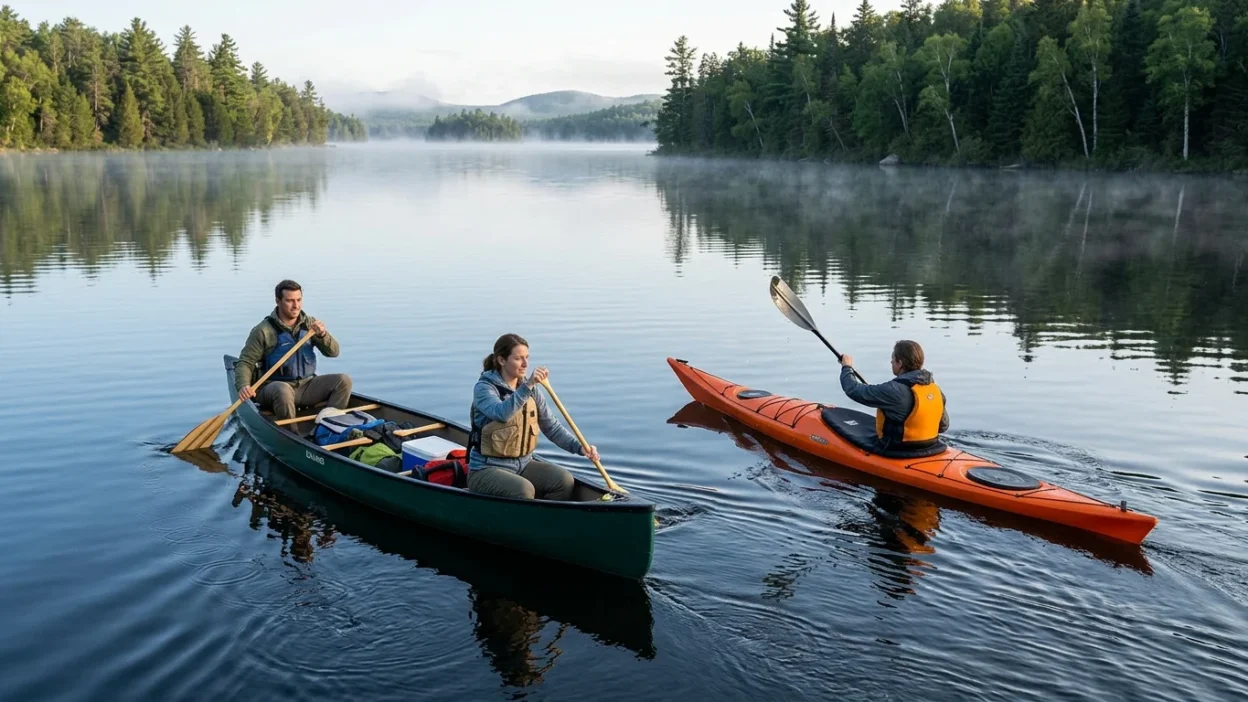
Choosing between a canoe and a kayak can feel confusing when you are new to paddling. Both boats let you explore lakes, rivers, and calm waterways, but they offer different experiences. A canoe usually has an open top, more room for people and gear, and a comfortable sitting position. A kayak often has a closed or partly open deck, a lower seating position, and a double-bladed paddle.
So, canoe vs kayak: which is better for beginners? The answer depends on where you plan to paddle, how much equipment you need, and whether you prefer a relaxed ride or more control on the water. You do not need years of experience to enjoy either boat. With the right equipment, basic instruction, and safe water conditions, beginners can learn both.
Quick Answer
A canoe is often better for beginners who want extra space, easy entry, and room for family trips or camping gear. A recreational kayak is often better for solo beginners who want a compact boat, simple forward paddling, and easy handling on calm lakes. Choose based on your comfort, plans, and water conditions.
Why Do People Confuse Canoes and Kayaks?
Canoes and kayaks look similar because both are small boats moved by paddling. Both can be used for recreation, fishing, exploring, and exercise.
However, their designs affect how people sit, paddle, carry equipment, and control the boat.
The biggest differences are:
- Canoe: Usually open on top, with higher sides and more room inside.
- Kayak: Usually lower to the water, with a double-bladed paddle and a more enclosed or streamlined design.
- Canoe paddle: Usually has one blade at one end.
- Kayak paddle: Usually has blades at both ends.
Neither boat is automatically easier for everyone. Your experience will depend on the boat’s design, the water conditions, and your paddling skills.
What Is a Canoe?
A canoe is a narrow boat with an open top and plenty of space inside. Paddlers often sit on raised seats or kneel on the bottom. Most traditional canoes use a single-bladed paddle.
Canoes are popular for family outings, fishing, camping, and carrying supplies. Their open design makes it easier to bring bags, food, and other equipment.
Why Is a Canoe Good for Beginners?
A canoe can be a good choice if you want more room to move and do not mind learning how to steer with a single-bladed paddle.
Its open design also makes getting in and out easier in many situations. However, a canoe can feel less stable if passengers move suddenly or if the boat is poorly loaded.
Best for: Families, couples, camping trips, fishing, and paddlers who need extra storage space.
What Is a Kayak?
A kayak is a narrow boat designed for one or more paddlers. Many recreational kayaks have an open seating area, while touring and other types may have a covered cockpit.
Most kayaks use a double-bladed paddle. You move the paddle from side to side to push the boat forward.
Kayaks are popular for solo adventures, lake trips, fishing, and exploring waterways. Their compact shape can make them easier to transport and store, depending on the model.
Why Is a Kayak Good for Beginners?
A recreational kayak can be a great starting point for someone who wants to paddle alone. Its double-bladed paddle makes forward paddling straightforward to learn, although steering and correcting direction still take practice.
Many beginner-friendly models are designed for calm water and offer good initial stability.
Best for: Solo paddlers, short lake trips, recreational outings, and people who prefer a compact boat.
Canoe vs Kayak: Comparison Table
| Feature | Canoe | Kayak |
| Design | Usually open on top | Open or partly enclosed |
| Paddle | Usually single-bladed | Usually double-bladed |
| Seating | Raised seat or kneeling | Low seat, often with legs forward |
| Storage | Often offers more open space | Depends on model; some have sealed storage |
| Solo paddling | Requires practice with steering | Often straightforward to learn |
| Tandem trips | Excellent for two or more people | Tandem models are available |
| Getting in and out | Often easier because of the open design | Depends on the seating design and location |
| Transport | Often wider and bulkier | Many recreational models are compact |
| Best conditions | Calm lakes and suitable rivers | Calm lakes and suitable rivers |
| Beginner suitability | Good for group trips and extra gear | Good for solo recreational paddling |
Neither option wins in every category. The best choice depends on the particular boat and how you plan to use it.
When Should You Choose a Canoe or Kayak?
Choose a Canoe When…
A canoe may suit you better if:
- You want to paddle with a partner, children, or friends.
- You need space for camping supplies or picnic bags.
- You prefer an open boat with room to move.
- You plan relaxed trips on calm lakes.
- You want to carry fishing equipment or other bulky items.
For example, a family planning a short lake outing may find a canoe more practical because it can hold several passengers and their belongings.
Remember that every passenger and item adds weight. Follow the boat’s capacity limits and distribute the load carefully.
Choose a Kayak When…
A kayak may suit you better if:
- You usually paddle alone.
- You want a compact boat for recreational use.
- You prefer using a double-bladed paddle.
- You want to explore calm lakes or sheltered waterways.
- You want a dedicated fishing or recreational kayak.
For example, a beginner who wants to paddle around a quiet lake for an hour may enjoy a stable recreational kayak.
A kayak is not always easier to carry or store. Larger fishing and touring models can be heavy, so check the weight before buying.
12 Examples of Canoe and Kayak Use
These examples show how to choose the right boat for different activities.
- Family lake trip: A canoe may be more practical because it offers room for passengers and bags.
- Solo morning paddle: A recreational kayak can be a comfortable choice for one person.
- Camping adventure: A canoe often provides generous space for tents, food, and supplies.
- Casual fishing: Either boat can work, but a fishing kayak or a stable canoe may suit different needs.
- Short recreational outing: A beginner-friendly kayak can be easy to manage on calm water.
- Paddling with a friend: A tandem kayak or a two-person canoe can work well.
- Taking a picnic: A canoe’s open interior makes carrying a cooler or picnic bag convenient.
- Exploring a quiet lake: Both boats are suitable when conditions are safe.
- Carrying bulky equipment: A canoe often offers more flexible open storage.
- Practicing paddling skills: Both boats help beginners learn direction control, balance, and safe movement.
- Transporting a boat alone: A lightweight recreational kayak may be easier to handle, but check its actual weight and shape.
- Planning a river trip: Choose a boat designed for the river’s conditions. Moving water may require training and a suitable craft, not simply a beginner-friendly label.
Common Mistakes Beginners Make
1. Thinking Every Kayak Is Unstable
Some people assume kayaks tip over easily. In reality, stability varies by design. Many recreational kayaks have wide hulls that provide good initial stability on calm water.
2. Assuming Every Canoe Is Easier
A canoe’s open design can make entry easier, but controlling a canoe in wind or current can take practice.
3. Choosing Only by Price
A low price does not guarantee a suitable boat. Consider weight, comfort, durability, capacity, and intended use.
4. Ignoring Water Conditions
A boat that feels comfortable on a calm lake may not be appropriate for rough water or strong currents. Choose your craft for the conditions you will face.
5. Forgetting Safety Equipment
Beginners should wear a properly fitted personal flotation device (PFD), check the weather, and learn basic rescue procedures. Avoid paddling alone in unfamiliar or challenging conditions.
What Is an Easy Memory Trick?
Use this simple way to remember the difference:
- Canoe = Carry more. Think of an open boat with space for people and gear.
- Kayak = Double-bladed paddle. Think of a paddler moving the paddle from side to side.
These are general clues, not strict rules. Canoes and kayaks come in many shapes and sizes, and some models are designed for special activities.
American vs British English
The words canoe and kayak are used in both American and British English. Their basic meanings are the same.
There is no major spelling difference between the two varieties of English. Both words refer to different types of small paddle-powered boats.
In everyday conversation, people in both countries may use these words when discussing holidays, outdoor sports, fishing, or water adventures.
Similar Words You Should Know
Here are a few related terms that can help beginners understand paddling.
- Paddle: A tool used to move and steer a canoe or kayak.
- Oar: A long rowing tool that is usually attached to a boat. Oars work differently from handheld paddles.
- Raft: A floating craft that is often wider and used for carrying people or navigating rivers.
- Rowboat: A boat moved using oars rather than paddles.
- Canoeing: The activity of traveling in or using a canoe.
- Kayaking: The activity of traveling in or using a kayak.
- Paddling: The general action of moving a boat with a paddle.
These terms are related, but they do not all describe the same kind of boat or activity.
Final Verdict: Which Is Better for Beginners?
For many beginners, a recreational kayak is a good choice for solo paddling on calm lakes. It offers a straightforward way to learn forward paddling and can be practical for short outings.
A canoe may be the better choice if you want extra room, plan to paddle with other people, or need to carry camping gear.
The best beginner boat is the one that matches your needs, fits your body comfortably, and suits the water where you will paddle. If possible, rent both before buying one.
Frequently Asked Questions
1. Is a canoe or kayak easier for beginners?
A recreational kayak is often easier for solo beginners to learn for forward paddling. A canoe can be easier for getting in and out and carrying equipment. The best option depends on your comfort and intended activity.
2. Which is safer, a canoe or a kayak?
Neither is always safer. Safety depends on the boat, water conditions, weather, skill level, and use of proper equipment. Beginners should wear a PFD and start in calm, sheltered water.
3. Which is more stable for beginners?
Both can be stable. A wide recreational kayak may feel steady while sitting low, while a canoe can provide a stable platform when properly loaded. Stability varies by hull design and changes with water conditions.
4. Is a canoe or kayak better for one person?
A recreational kayak is often convenient for solo paddling because it is designed for individual use. Solo canoeing is also possible, but beginners may need extra practice with steering and paddle technique.
5. Which is better for fishing?
Both can work well for fishing. A canoe offers open storage space, while a fishing kayak may provide specialized seating, rod holders, and storage compartments. Choose based on the water, equipment, and fishing style.
6. Can a beginner use a kayak on a river?
Yes, if the river section is suitable for beginners and the kayak is designed for those conditions. Start on gentle, calm water with proper instruction. Avoid strong currents, rapids, and unfamiliar rivers until you have the necessary skills.
7. Should I buy a canoe or kayak first?
Consider renting or borrowing both before buying. Choose a kayak if you mainly want solo lake trips. Choose a canoe if you need extra space for passengers or gear. Also check storage space, transport needs, and the boat’s weight.
Remember This
- Canoe: Open design, generous space, and a single-bladed paddle.
- Kayak: Lower seating, a double-bladed paddle, and many solo-friendly models.
- For beginners: Match the boat to your plans and start on calm water.
- For safety: Wear a PFD and learn basic paddling and rescue skills.
Conclusion
Choosing between a canoe and a kayak does not need to be difficult. Both can give beginners a fun way to enjoy nature, explore lakes, and spend time outdoors. A recreational kayak often suits solo paddlers, while a canoe may be more practical for families, camping, and carrying extra equipment.
Before making your choice, think about where you will paddle, how many people will join you, and how you will transport and store the boat. Try both if you can, wear a properly fitted PFD, and start in calm water. With the right boat and a little practice, you can enjoy paddling with greater comfort and confidence.

David Wyatt is a Bible researcher and Christian writer passionate about uncovering coded biblical insights, symbolism, prophecy, and scriptural meanings. He shares faith-based, well-researched content that inspires deeper Bible study.