
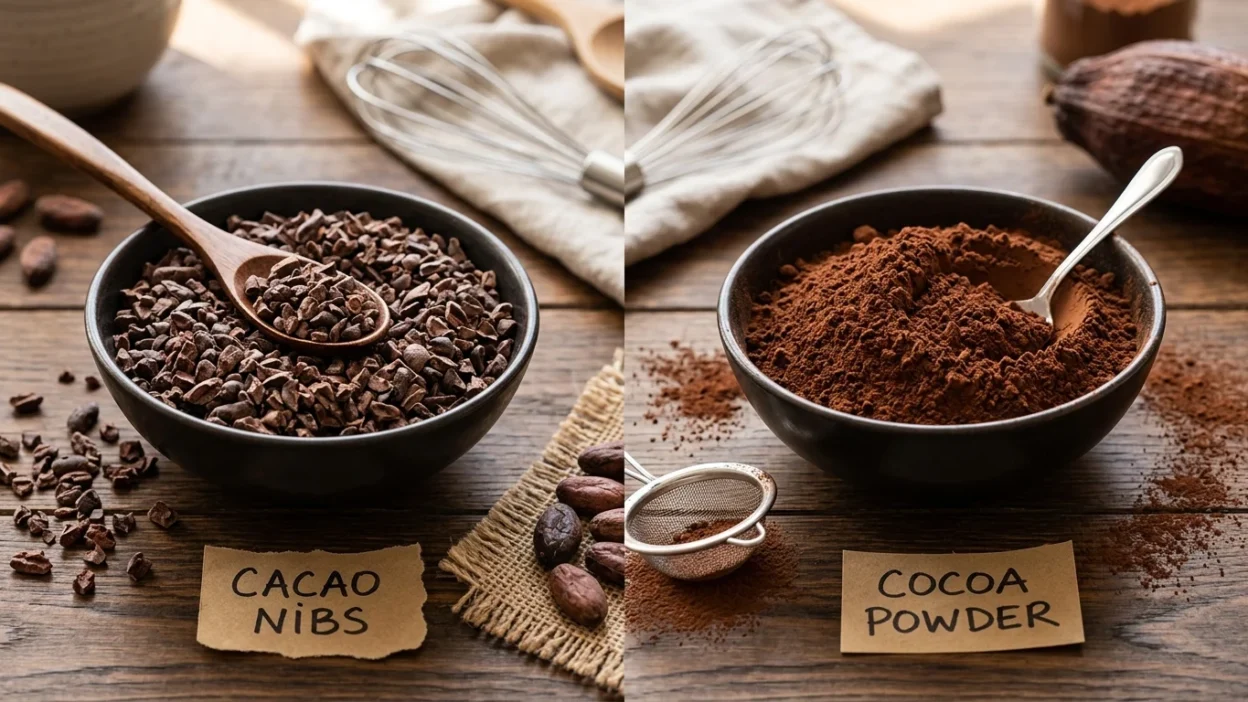
Have you ever wondered whether cacao nibs and cocoa powder are the same thing? Both come from cacao beans, and both are popular ingredients in chocolate recipes. However, they look different, taste different, and work in different ways when cooking or baking. Knowing the difference can help you choose the right ingredient for your favorite foods.
Cacao nibs are small pieces of crushed cacao beans. They have a firm, crunchy texture and a deep, bitter chocolate flavor. Cocoa powder is a fine powder made from cacao beans after much of their cocoa butter has been removed. It blends easily into drinks, cakes, brownies, and other recipes. Although both ingredients come from the same source, you cannot always replace one with the other without changing the result. In this guide, you will learn what cacao nibs and cocoa powder mean, how they differ, when to use each one, and how to remember the difference.
Quick Answer
Cacao nibs are small, crunchy pieces of cacao beans, while cocoa powder is a fine, dry powder made from cacao solids. Nibs add texture and a strong, bitter chocolate taste to foods. Cocoa powder mixes smoothly into recipes, making it useful for brownies, cakes, smoothies, and hot chocolate.
Why Do People Confuse Cacao Nibs and Cocoa Powder?
People often confuse cacao nibs and cocoa powder because both come from cacao beans. They also have a rich chocolate flavor and are sold as ingredients for baking, drinks, and snacks.
The main difference is their form and texture. Cacao nibs are solid pieces, while cocoa powder is finely ground. Their different forms affect how they taste, mix, and behave in recipes.
Another reason for the confusion is the words cacao and cocoa. These terms are related and sometimes used differently by manufacturers. In general, cacao nibs are broken pieces of cacao beans, while cocoa powder is a processed powder made from cacao solids.
First Word: What Are Cacao Nibs?
Cacao nibs are small pieces of cacao beans that have been cleaned, roasted or otherwise processed, and broken into fragments. They are commonly sold as a crunchy ingredient for snacks and recipes.
Meaning of Cacao Nibs
The word nibs refers to small pieces. Cacao nibs are therefore small fragments of cacao beans rather than a smooth powder or finished chocolate.
They usually have a dark brown color and a strong, bitter chocolate taste. Unlike many chocolate chips, plain cacao nibs generally contain no added sugar.
Taste and Texture
Cacao nibs have a firm, crunchy texture. Their flavor is rich, earthy, and slightly bitter. They do not usually taste like sweet milk chocolate.
Because they keep their solid shape, cacao nibs are useful when you want a little crunch in your food.
Common Uses of Cacao Nibs
You can use cacao nibs in:
- Oatmeal and breakfast cereal
- Yogurt and smoothie bowls
- Homemade granola
- Cookies and muffins
- Trail mix and snack bars
- Pancakes and waffles
- Homemade desserts
For example, sprinkle cacao nibs over a bowl of yogurt to add crunch and a strong chocolate flavor without adding much sweetness.
Second Word: What Is Cocoa Powder?
Cocoa powder is a fine powder made from cacao beans. During production, cacao beans are processed into cocoa mass, and much of the cocoa butter is removed. The remaining cocoa solids are ground into powder.
Meaning of Cocoa Powder
Cocoa powder provides chocolate flavor without the same amount of fat found in chocolate or cacao nibs. The exact fat content depends on the product and how it is processed.
You can find natural cocoa powder and Dutch-process cocoa powder. Natural cocoa powder is generally more acidic, while Dutch-process cocoa powder has been treated to reduce its acidity and often has a smoother, darker flavor.
These types can behave differently in baking, so it is helpful to follow the recipe’s instructions.
Taste and Texture
Cocoa powder is soft, dry, and finely ground. Its flavor can range from sharp and bitter to smooth and deep, depending on the variety and processing method.
Unlike cacao nibs, cocoa powder does not add a crunchy texture. Instead, it spreads chocolate flavor throughout a mixture.
Common Uses of Cocoa Powder
Cocoa powder is commonly used in:
- Brownies and chocolate cakes
- Cookies and cupcakes
- Hot chocolate
- Chocolate smoothies
- Puddings and desserts
- Homemade chocolate sauces
- Pancake and waffle batter
For example, adding cocoa powder to cake batter gives the cake a chocolate flavor without leaving hard pieces of cacao in every bite.
Cacao Nibs vs Cocoa Powder: Comparison Table
| Feature | Cacao Nibs | Cocoa Powder |
| Form | Small solid pieces | Fine powder |
| Texture | Crunchy and firm | Soft and dry |
| Flavor | Strong, earthy, often bitter | Chocolatey, with bitterness that varies |
| Main purpose | Adds texture and chocolate flavor | Adds chocolate flavor to mixtures |
| Common uses | Granola, yogurt, snacks, cookies | Cakes, brownies, drinks, sauces |
| Sweetness | Usually unsweetened | Usually unsweetened |
| Mixing | Remains in small pieces | Blends into suitable mixtures |
| Fat content | Contains the natural fat of the cacao bean | Usually lower in fat because much cocoa butter is removed |
| Best texture result | Crunchy bites | Smooth or evenly flavored mixtures |
| Direct replacement | Not a like-for-like substitute for powder | Not a like-for-like substitute for nibs |
Important: Neither ingredient is automatically sweet. Check the product label because added ingredients and processing methods can vary.
When Should You Use Cacao Nibs or Cocoa Powder?
The best choice depends on what you want your food to taste and feel like.
Choose Cacao Nibs When You Want Crunch
Cacao nibs are a good choice when you want solid pieces of chocolate flavor in your food.
Use them when making:
- Crunchy granola
- Yogurt toppings
- Homemade snack bars
- Cookies with a firm chocolate bite
- Trail mix
- Breakfast bowls
For example, if you want your oatmeal to have a crunchy texture, cacao nibs can be a useful topping.
Choose Cocoa Powder When You Want Smooth Chocolate Flavor
Cocoa powder works well when you want chocolate flavor spread throughout a recipe.
Use it when making:
- Chocolate cake
- Brownies
- Chocolate milk or hot cocoa
- Chocolate pudding
- Smoothies
- Chocolate sauces
For example, if you want to make chocolate pancakes, cocoa powder mixes into the batter more easily than cacao nibs.
Can You Substitute One for the Other?
You can sometimes use one in a recipe that calls for the other, but the result will change.
Replacing cocoa powder with cacao nibs will add crunchy pieces instead of evenly distributed chocolate flavor. Replacing cacao nibs with cocoa powder will remove the crunch and may change the recipe’s balance of dry ingredients and fat.
If you need a substitute, consider the role of the ingredient rather than its name alone.
10 Examples of Cacao Nibs and Cocoa Powder
These examples show how each ingredient works in everyday foods.
- Cacao nibs in oatmeal: Sprinkle nibs over warm oatmeal for a crunchy finish.
- Cocoa powder in oatmeal: Stir cocoa powder into oatmeal for a more even chocolate flavor.
- Cacao nibs in yogurt: Add nibs to plain yogurt for texture and a bitter chocolate taste.
- Cocoa powder in smoothies: Blend cocoa powder with milk, banana, and yogurt for a chocolate smoothie.
- Cacao nibs in cookies: Mix nibs into cookie dough for small, crunchy pieces.
- Cocoa powder in brownies: Add cocoa powder to brownie batter for a rich chocolate flavor.
- Cacao nibs in granola: Combine nibs with oats, nuts, and seeds for a crunchy breakfast mixture.
- Cocoa powder in hot chocolate: Whisk cocoa powder with warm milk and a sweetener to make a chocolate drink.
- Cacao nibs on pancakes: Sprinkle nibs over pancakes for a crunchy topping.
- Cocoa powder in cake batter: Mix cocoa powder into the dry ingredients to make a chocolate cake.
- Cacao nibs in trail mix: Combine nibs with nuts, seeds, and dried fruit for a convenient snack.
- Cocoa powder in pudding: Use cocoa powder to distribute chocolate flavor throughout the pudding.
Common Mistakes to Avoid
Even though cacao nibs and cocoa powder come from the same source, they are not interchangeable in every recipe.
Mistake 1: Thinking They Have the Same Texture
Cacao nibs are crunchy, while cocoa powder is fine. Choosing the wrong one can change the texture of your food.
Mistake 2: Assuming Both Are Sweet
Plain cacao nibs and unsweetened cocoa powder are usually bitter rather than sweet. Add a suitable sweetener if your recipe needs it.
Mistake 3: Replacing Them in Equal Amounts Without Adjustments
A spoonful of nibs does not work like a spoonful of cocoa powder. One adds solid pieces, while the other adds dry cocoa solids.
Mistake 4: Ignoring the Type of Cocoa Powder
Natural and Dutch-process cocoa powder can behave differently in baking. Use the type specified in your recipe when possible.
Mistake 5: Assuming All Chocolate Products Are the Same
Chocolate chips, cacao nibs, cocoa powder, and sweetened drinking chocolate have different ingredients and uses. Check the label before substituting.
Memory Trick: How to Remember the Difference
Use this simple trick:
- Nibs = Nibbles: Think of small pieces you can bite and crunch.
- Powder = Pour and Mix: Think of a fine ingredient you can measure and blend into a recipe.
Remember that cacao nibs add texture, while cocoa powder adds chocolate flavor throughout a mixture.
American vs British English
The words cacao nibs and cocoa powder are understood in both American and British English. There is no major spelling difference between the two varieties for these terms.
However, product names can vary between brands and countries. Some manufacturers use cacao to describe less-processed products, while others use cocoa for a wide range of cacao-based ingredients.
Always check the ingredient list and product description rather than relying only on the name.
Similar Words You Should Know
Several related terms can make chocolate recipes confusing. Here is what they mean.
- Cacao beans: The seeds inside cacao pods. They are the starting material for cacao and cocoa products.
- Cacao nibs: Small pieces of broken cacao beans.
- Cocoa powder: Fine powder made from cacao solids after much of the cocoa butter has been removed.
- Cocoa butter: The natural fat extracted from cacao beans.
- Cocoa mass: A paste made by grinding cacao nibs; it contains both cocoa solids and cocoa butter.
- Chocolate chips: Small pieces of formulated chocolate, often containing sugar and sometimes milk ingredients.
- Drinking chocolate: A product designed for making chocolate drinks. It may contain sugar, cocoa powder, or other ingredients.
Understanding these terms makes it easier to select the right ingredient for baking, cooking, and snacking.
Final Verdict: Cacao Nibs vs Cocoa Powder
Cacao nibs and cocoa powder both come from cacao beans, but they serve different purposes in the kitchen.
Choose cacao nibs when you want crunchy pieces and a strong, bitter chocolate taste. Choose cocoa powder when you want chocolate flavor mixed smoothly into cakes, brownies, drinks, and desserts.
Neither ingredient is always the better choice. The right option depends on your recipe, preferred texture, and desired flavor.
Frequently Asked Questions
1. Are cacao nibs the same as cocoa powder?
No. Cacao nibs are small pieces of cacao beans, while cocoa powder is a fine powder made from cacao solids. They have different textures and behave differently in recipes.
2. Which is better for baking, cacao nibs or cocoa powder?
It depends on what you are baking. Cocoa powder is useful for chocolate cakes and brownies because it spreads flavor throughout the batter. Cacao nibs are useful when you want crunchy chocolate-flavored pieces in cookies, muffins, or granola.
3. Can I use cacao nibs instead of cocoa powder?
Not as a direct, equal replacement in most recipes. Nibs add solid pieces and crunch, while cocoa powder adds dry cocoa solids throughout a mixture. Substitution may require changes to the recipe.
4. Do cacao nibs taste like chocolate?
Yes, cacao nibs have a chocolate-like flavor, but they are usually bitter and less sweet than regular chocolate. Their taste is often earthy and intense.
5. Is cocoa powder always sweet?
No. Unsweetened cocoa powder is generally bitter and contains little or no added sugar. Sweetened cocoa mixes are different, so check the product label.
6. Can I put cacao nibs in a smoothie?
Yes. You can blend cacao nibs into a smoothie, although they may leave small particles depending on your blender. For a smoother chocolate flavor, cocoa powder is usually easier to mix.
7. Do cacao nibs and cocoa powder have the same nutritional value?
No. Their nutrient levels can differ because their fat content, processing, and serving sizes are different. Both may contain fiber and minerals, but the exact amounts depend on the product. Compare nutrition labels for accurate information.
8. Which should I use for hot chocolate?
Unsweetened cocoa powder is generally the more practical choice because it can be whisked into warm milk or water. You may need a sweetener to balance its bitterness. Cacao nibs are better suited to toppings or recipes that benefit from solid pieces.
Remember This
Cacao nibs are crunchy pieces; cocoa powder is a fine powder. Nibs add texture, while cocoa powder blends chocolate flavor into recipes. Choose the ingredient that matches the result you want.
Conclusion
Understanding cacao nibs vs cocoa powder differences makes choosing ingredients much easier. Although both come from cacao beans, their textures, processing methods, and uses are different. Cacao nibs are ideal for crunchy toppings, snacks, and recipes with small chocolate-flavored pieces. Cocoa powder is more suitable for cakes, brownies, smoothies, and chocolate drinks.
Before choosing either ingredient, think about your recipe and the texture you want. If you need a crunchy bite, reach for cacao nibs. If you want chocolate flavor spread throughout a mixture, choose cocoa powder. Reading the product label can also help you understand whether the ingredient is unsweetened and how it may work in your recipe.

Alexander Cody is a Bible researcher and Christian writer at BiblePeak, dedicated to exploring biblical codes, Scripture insights, and faith-based studies. He creates clear, engaging, and well-researched content that helps readers better understand the Bible and its timeless messages.