
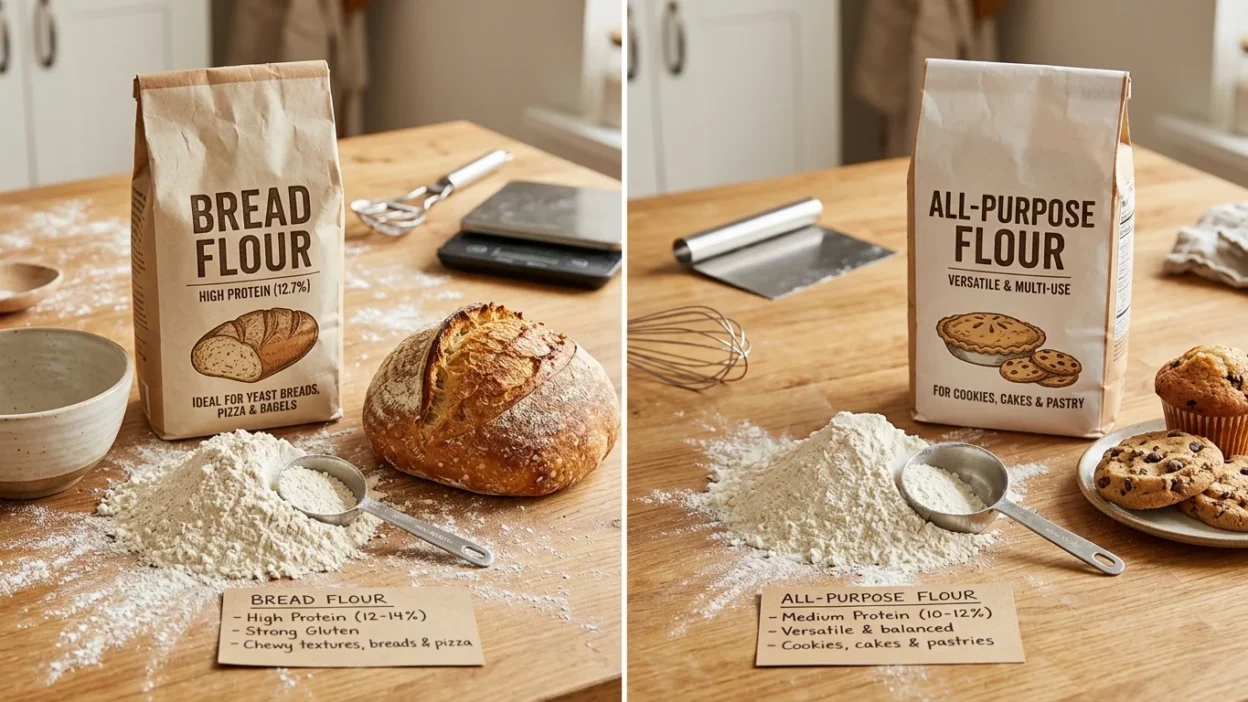
Have you ever stood in your kitchen, ready to bake fresh bread, only to find two bags of flour? One says bread flour, and the other says all-purpose flour. Both look almost the same. But can you use them in the same recipe?
The answer is yes, in many cases! However, each flour has its own special qualities. Choosing the right one can change how your bread, pizza, cookies, or cakes turn out.
Bread flour vs all-purpose flour is a common question for new and skilled bakers. Bread flour has more protein, which helps dough form strong gluten. This gives bread a chewy texture and helps it rise well. All-purpose flour has less protein, so it works well for many baked foods, from soft cakes to cookies and quick breads.
But which flour should you choose for your next recipe? Do you really need bread flour to make a good loaf? And what happens if you swap one for the other?
In this guide, we will explain the key differences in simple words. You will learn about protein levels, texture, baking uses, and easy flour swaps. We will also share helpful tips to make your baking easier.
Whether you are making homemade bread for your family or baking cookies for a special day, the right flour can help you get the results you want.
Bread Flour vs All-Purpose Flour: What Is the Difference?
The main difference between bread flour and all-purpose flour is their protein content. Protein helps form gluten when flour mixes with water. Gluten gives dough its strength and stretch.
1. What Is Bread Flour?
Bread flour is made for recipes that need strong dough. It usually has about 12% to 14% protein, although the amount can vary by brand.
When you mix bread flour with water, its proteins form a strong gluten network. This network holds the gas made by yeast. As a result, the dough can rise and create a chewy, airy loaf.
Bread flour is a great choice for:
- Homemade white bread
- Sourdough bread
- Pizza dough
- Bagels
- Dinner rolls
- Chewy artisan loaves
Bread flour is especially helpful when you want bread with a firm crust and a chewy inside.
2. What Is All-Purpose Flour?
All-purpose flour is a flexible flour that works in many recipes. It often contains around 10% to 12% protein, depending on the brand.
It forms enough gluten for many baked foods but usually creates a softer texture than bread flour.
You can use all-purpose flour for:
- Cookies
- Pancakes
- Muffins
- Cakes
- Biscuits
- Quick breads
- Some types of yeast bread
This flour is a useful choice for home bakers because one bag can serve many needs.
3. Bread Flour vs All-Purpose Flour at a Glance
| Feature | Bread Flour | All-Purpose Flour |
| Protein | Usually 12–14% | Usually 10–12% |
| Gluten strength | Higher | Moderate |
| Bread texture | Chewy and strong | Softer and more tender |
| Dough feel | Often firmer and more elastic | Often easier to handle |
| Best uses | Bread, bagels, pizza | Cookies, cakes, muffins, general baking |
| Can you swap it? | Yes, in many recipes | Yes, in many bread recipes |
Remember that protein levels vary by brand. Always check the flour package when the exact result matters.
Which Flour Is Better for Bread?
If you want a chewy loaf with a strong rise, bread flour is often the better choice. Its extra protein helps the dough hold its shape and trap air.
This is useful when making sourdough, sandwich bread, or crusty artisan bread.
However, you can make bread with all-purpose flour, too. Many home bakers use it to make soft sandwich loaves, rolls, and simple yeast breads.
Your bread may have a softer texture and a slightly different shape. But that does not mean it will taste bad.
Can You Make Bread With All-Purpose Flour?
Yes! You do not need to run to the store if your recipe calls for bread flour and you only have all-purpose flour.
Follow these simple tips:
- Use the same amount of flour by weight when possible.
- Mix and knead the dough until it becomes smooth and stretchy.
- Watch the dough, not just the clock, as it rises.
- Shape the loaf gently to help it hold its form.
The dough may feel less elastic than dough made with bread flour. That is normal.
Can You Use Bread Flour for Cookies?
Yes, but the texture may change.
Bread flour can make cookies chewier because it forms more gluten. This can be great for thick chocolate chip cookies. However, too much mixing can make cookies tough.
For soft, tender cookies, all-purpose flour is usually a safer choice.
Can You Substitute Bread Flour for All-Purpose Flour?
In most recipes, you can swap bread flour and all-purpose flour. The key is knowing how the change may affect your baked food.
Using All-Purpose Flour Instead of Bread Flour
If your bread recipe calls for bread flour, all-purpose flour can often work as a replacement.
Your loaf may be a little less chewy. It may also have a softer crumb or less height, depending on the recipe.
For pizza dough, all-purpose flour can create a tender crust. Bread flour is often better when you want a chewy, stretchy crust.
Using Bread Flour Instead of All-Purpose Flour
Bread flour can replace all-purpose flour in many recipes, but it may make the final result firmer or chewier.
For cakes and delicate pastries, all-purpose flour is usually the better option. Bread flour may create a tougher texture, especially if you mix the batter too much.
Simple rule: Use bread flour for chewy baked foods and all-purpose flour for everyday baking.
Does Bread Flour Need More Water?
Bread flour often absorbs more water because it contains more protein. This means a dough made with bread flour may need a little more water than one made with all-purpose flour.
Still, the amount depends on the recipe, flour brand, and other ingredients.
If your dough feels too dry, add water a little at a time. If it feels too wet, give it time to rest before adding more flour.
Do not add lots of extra flour too quickly. A sticky dough can become easier to handle after resting and kneading.
Is Bread Flour Healthier Than All-Purpose Flour?
Bread flour is not automatically healthier than all-purpose flour.
Both types provide carbohydrates and some protein. Their nutritional values are often quite similar, although the exact amounts vary by brand and whether the flour is enriched or whole grain.
If you want more fiber, look for whole-wheat flour or other whole-grain options. Whole grains contain more of the grain’s natural fiber than refined white flour.
For most people, the best choice depends on the recipe, dietary needs, and personal taste.
Spiritual Lessons From the Simple Act of Baking
Baking bread can also remind Christians of the value of patience, care, and daily provision.
In Matthew 6:11, Jesus teaches His followers to pray, “Give us this day our daily bread.” This verse reminds believers to trust God for their daily needs.
Bread also appears in John 6:35, where Jesus calls Himself the bread of life. This points to the spiritual nourishment and hope found in Him.
Just as different flours serve different purposes, people also have different gifts and roles. In 1 Corinthians 12:12, Paul describes believers as many parts forming one body.
These lessons are not about a special biblical meaning for bread flour. Rather, they offer a simple way to reflect on faith while doing an everyday task.
Practical Baking Tips for Better Results
- Check the label: Protein levels can differ between brands.
- Measure by weight: A kitchen scale helps you use the right amount.
- Avoid overmixing: Too much mixing can make some baked foods tough.
- Let dough rest: Resting helps flour absorb water and makes dough easier to handle.
- Follow your recipe: The best flour depends on the texture you want.
Frequently Asked Questions
1. Is bread flour the same as all-purpose flour?
No. Bread flour usually has more protein, which helps create stronger gluten and chewier bread. All-purpose flour has a wider range of uses.
2. Can I use all-purpose flour instead of bread flour?
Yes. All-purpose flour works in many bread recipes. Your loaf may be softer and less chewy than one made with bread flour.
3. Can I use bread flour for cakes?
You can, but it is not the best choice for most cakes. Its higher protein content may create a firmer texture. All-purpose or cake flour is usually better.
4. Which flour is best for pizza dough?
Bread flour is a great choice for chewy pizza crust. All-purpose flour also works well if you prefer a softer, more tender crust.
5. Does bread flour make bread rise more?
It can help bread hold its shape and trap gas, which may improve its rise. However, the result also depends on the yeast, hydration, kneading, and proofing time.
6. Can I mix bread flour and all-purpose flour?
Yes. Mixing the two flours is a simple way to adjust dough strength and texture. The final result depends on the amounts you use.
7. Which flour is better for beginners?
All-purpose flour is a good starting point because it works in many recipes. Bread flour is worth trying when you want chewier bread or pizza.
Conclusion
When comparing bread flour vs all-purpose flour, the main difference is protein content. Bread flour creates stronger dough and chewier bread, while all-purpose flour works well for many everyday recipes. You can often swap one for the other, but the texture may change. Choose flour based on what you want to bake, and do not be afraid to practice. With patience and care, you can make delicious food at home.

Alexander Cody is a Bible researcher and Christian writer at BiblePeak, dedicated to exploring biblical codes, Scripture insights, and faith-based studies. He creates clear, engaging, and well-researched content that helps readers better understand the Bible and its timeless messages.