Have you ever felt happy one moment and sad the next? Or have you seen someone go through strong mood changes and wondered what was happening?
Mood changes are part of life. But sometimes, these changes are intense and affect daily life, work, and relationships. Two mental health conditions that people often confuse are borderline personality disorder (BPD) and bipolar disorder.
Both can involve strong emotions, mood changes, and problems in relationships. Yet, they are not the same condition.
BPD often affects how a person feels about themselves, handles emotions, and connects with others. Bipolar disorder mainly involves episodes of major changes in mood, energy, and activity. These episodes can last for days or weeks, and sometimes longer.
Understanding the difference can help you find the right support. It can also help you show more care to someone who is struggling.
You may be asking, “How can I tell BPD vs bipolar apart?” The answer depends on more than mood swings alone. Doctors look at how symptoms begin, how long they last, what triggers them, and how they affect daily life.
This guide explains the main differences in simple terms. It also covers symptoms, diagnosis, treatment, and when to seek help. Remember, having some of these symptoms does not mean you have either condition. Only a trained mental health professional can make a proper diagnosis.
BPD vs Bipolar: What Is the Main Difference?
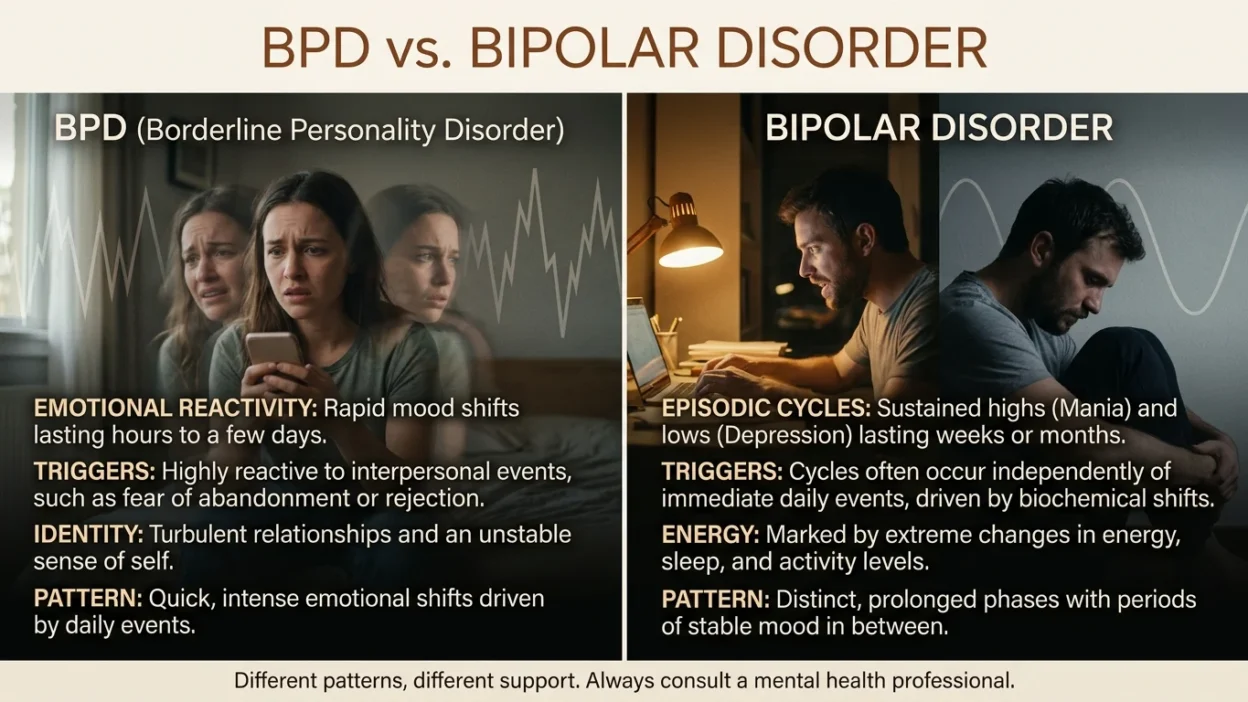
The biggest difference is the pattern of mood changes and the symptoms that come with them.
What Is Borderline Personality Disorder?
Borderline personality disorder is a mental health condition that can make it hard to manage strong emotions. It may also affect self-image, behavior, and close relationships.
A person with BPD may feel happy and safe with someone, then feel deeply hurt or afraid of being left out after a small disagreement. Their emotions can change quickly, and the feelings may be very intense.
Common signs may include:
- Strong fear of being left or rejected.
- Intense emotions that change quickly.
- Unstable or painful relationships.
- A changing sense of self or identity.
- Impulsive actions, such as sudden spending.
- Ongoing feelings of emptiness.
- Trouble managing anger.
- Self-harm or thoughts of suicide in some people.
Not everyone with BPD has all these symptoms. The condition can look different from one person to another.
What Is Bipolar Disorder?
Bipolar disorder is a mental health condition that causes clear episodes of changes in mood, energy, and activity.
A person may experience a high mood called mania or hypomania. They may feel unusually energetic, need much less sleep, talk faster, or take risks they would not usually take.
They may also have periods of depression. During these times, they may feel very sad, tired, hopeless, or lose interest in things they once enjoyed.
Common signs may include:
- Unusually high energy or activity.
- A much lower need for sleep.
- Racing thoughts or fast speech.
- Unusual confidence or irritability.
- Risky choices during a high mood.
- Periods of deep sadness or low energy.
- Changes in sleep, focus, and daily activity.
These symptoms happen in episodes that often last days or weeks. The length and severity depend on the person and the type of bipolar disorder.
Quick Comparison: BPD vs Bipolar
| Feature | Borderline Personality Disorder | Bipolar Disorder |
| Main concern | Emotion control, self-image, and relationships | Episodes of mood and energy changes |
| Mood pattern | Can shift quickly, sometimes within hours | Often lasts days or weeks |
| Common triggers | Rejection, conflict, or fear of abandonment may play a role | Episodes may occur without a clear immediate trigger |
| Self-image | May feel unstable or change often | Can change during mood episodes |
| Sleep and energy | May change with stress or emotions | Reduced need for sleep can occur during mania or hypomania |
| Treatment | Psychotherapy is a key treatment | Medication and psychotherapy are common |
| Can both occur? | Yes | Yes |
How Do BPD and Bipolar Mood Swings Feel Different?
Both conditions can cause emotional pain. However, the experience may be different.
Mood Changes in BPD
Imagine that a close friend does not reply to your message. You may start to worry that the friend is upset or wants to leave you.
That fear may lead to sadness, anger, or panic. If the friend later replies with kindness, your feelings may change again.
For someone with BPD, relationship stress can play a major role in intense emotional changes. The feelings may be strong and difficult to control.
This does not mean the person is choosing to feel this way. They may need help learning skills to manage emotions and build safer relationships.
Mood Episodes in Bipolar Disorder
Now imagine a person who has slept only a few hours each night but still feels full of energy. They talk very fast, start many projects, and feel able to do almost anything.
This change lasts several days and is very different from their usual behavior. Later, they may experience a period of deep sadness and low energy.
This pattern may be a sign of a bipolar mood episode. A clinician will look at the full pattern, how long it lasts, and how much it affects the person’s life.
The key point: BPD mood changes often involve strong emotional reactions, while bipolar disorder involves distinct mood episodes. But this difference alone cannot confirm a diagnosis.
Can Someone Have Both BPD and Bipolar Disorder?
Yes. A person can have both conditions, although they are separate diagnoses.
This can make diagnosis more complex because some symptoms overlap. For example, both conditions may involve impulsive behavior, emotional distress, and problems with relationships.
A mental health professional may ask about your past moods, sleep, relationships, behavior, and family history. They may also check for other conditions that could explain your symptoms.
It is important to share the full picture, even if some details feel hard to explain. You do not need to work out the diagnosis on your own.
Keep a simple record of your mood, sleep, energy, and important events. This can help you explain what you experience during an appointment.
How Are BPD and Bipolar Disorder Diagnosed?
There is no single online quiz or symptom that can reliably tell you whether you have BPD or bipolar disorder.
A psychiatrist or other qualified mental health professional will ask questions about your symptoms and health history. They may explore how long mood changes last, what happens before them, and how they affect your daily life.
For BPD, they may look at long-term patterns in emotions, relationships, behavior, and self-image.
For bipolar disorder, they will look for episodes of mania or hypomania and depression, including changes in sleep, energy, and activity.
They may also consider other causes, such as medical problems, medication effects, substance use, or other mental health conditions.
Treatment for BPD vs Bipolar
The good news is that both conditions can be treated. The right care depends on the person’s needs and symptoms.
Treatment for BPD
Psychotherapy, or talking therapy, is a key part of treatment for BPD.
One option is dialectical behavior therapy (DBT). It can help people learn to manage strong emotions, handle stress, and improve relationships.
Other therapies may help a person understand their feelings and thoughts in new ways. Medication may sometimes be used for related symptoms or other conditions, based on a clinician’s advice.
Treatment for Bipolar Disorder
Treatment often includes medication and psychotherapy. Medicines such as mood stabilizers or certain antipsychotics may help manage mood episodes and reduce the chance of future episodes.
Regular sleep, a steady daily routine, and support from trusted people may also help. Treatment plans should be made with a qualified clinician.
Do not start, stop, or change prescribed medication without speaking with your healthcare professional.
When Should You Seek Help?
Consider speaking with a mental health professional if mood changes are intense, happen often, or affect your work, sleep, safety, or relationships.
Seek urgent help if you or someone else may act on thoughts of suicide or self-harm, or if a mood episode creates immediate danger. Contact local emergency services or go to the nearest emergency department.
Asking for help is not a sign of weakness. It is a positive step toward understanding what is happening and findin
“
FAQs About BPD vs Bipolar
1. What is the main difference between BPD and bipolar disorder?
BPD mainly affects emotions, self-image, and relationships. Bipolar disorder causes mood episodes that affect energy, sleep, and daily life.
2. Can BPD and bipolar disorder look alike?
Yes. Both can cause mood changes, impulsive behavior, and emotional distress. However, their patterns and causes can differ.
3. Can someone have both BPD and bipolar disorder?
Yes. A person can have both conditions. A mental health professional can assess symptoms and help determine the right diagnosis.
4. How long do BPD mood swings last?
BPD-related mood changes can happen quickly and may last a few hours or longer. The pattern varies from person to person.
5. How long do bipolar mood episodes last?
Bipolar mood episodes often last days or weeks. Manic episodes may last a week or longer, while hypomanic episodes last at least four days.
6. Is BPD more serious than bipolar disorder?
Neither condition is always more serious. Both can cause major challenges, and their impact depends on the person’s symptoms, needs, and support.
7. Can BPD or bipolar disorder be treated?
Yes. BPD is often treated with psychotherapy, while bipolar disorder commonly requires medication and psychotherapy. Treatment depends on individual needs.
8. Can BPD be mistaken for bipolar disorder?
Yes. Some symptoms overlap, which can make diagnosis difficult. A qualified mental health professional will review symptom patterns and medical history.
9. Does BPD cause sudden mood changes?
Yes. People with BPD may experience intense emotional changes, often linked to stress or relationship events. These changes are not the same as bipolar mood episodes.
10. What are common signs of bipolar disorder?
Common signs include episodes of unusually high energy, reduced need for sleep, racing thoughts, impulsive behavior, and periods of depression.
11. Can people with BPD or bipolar disorder have healthy relationships?
Yes. With suitable treatment, support, and coping skills, people with either condition can build healthy relationships and improve their quality of life.
12. When should someone seek professional help?
Seek help when mood changes affect daily life, sleep, work, or relationships. If there is immediate danger or a risk of self-harm, seek urgent assistance.
Conclusion
The main difference in BPD vs bipolar is the pattern of symptoms. BPD often affects emotional control, self-image, and relationships. Bipolar disorder involves distinct episodes of mood and energy changes. Both can cause real pain, but support and treatment can help. If you recognize these patterns in yourself or someone you love, seek guidance from a qualified professional. You deserve care, understanding, and hope.

William Tyler is a passionate Christian writer at BiblePeak, dedicated to exploring the hidden meanings, biblical codes, Scripture insights, prophecy, and faith-based teachings. His mission is to help readers better understand God’s Word through clear, accurate, and inspiring biblical content.