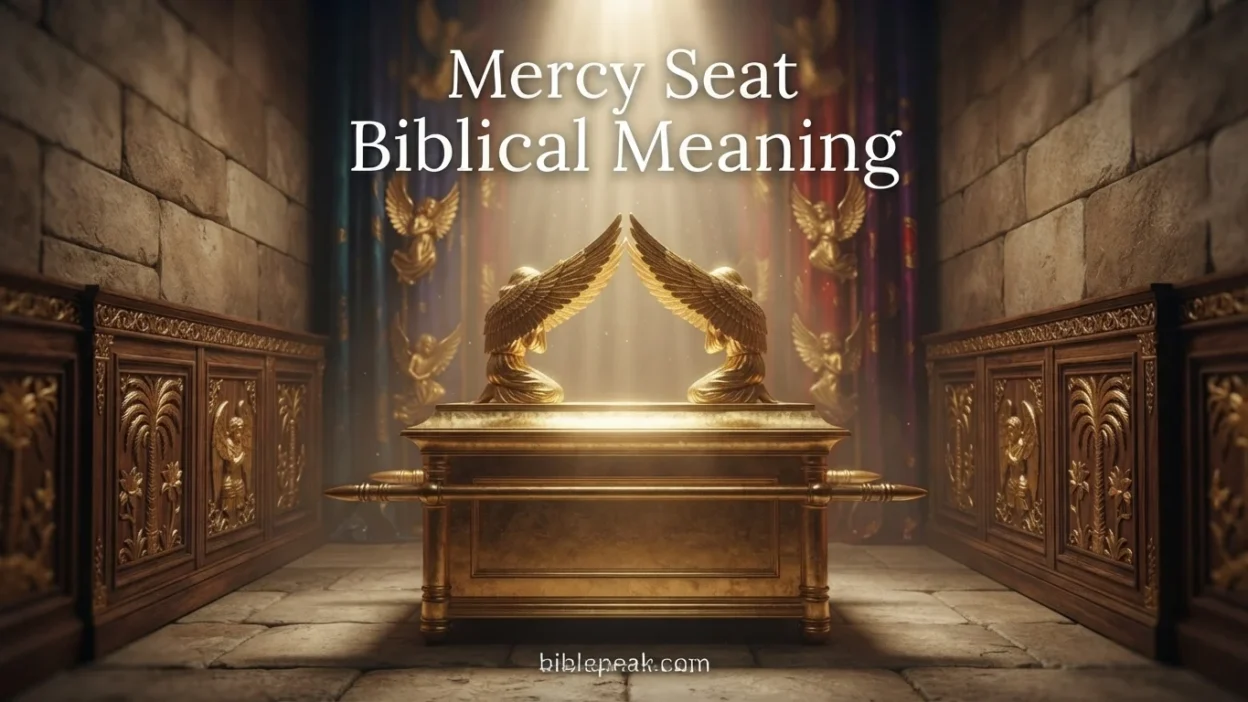
Imagine entering the holy place of the ancient tabernacle. Everything is quiet. The air feels sacred. At the center of the Most Holy Place is a special chest called the Ark of the Covenant. On top of it is a golden cover known as the mercy seat.
This was not an ordinary object. It was closely connected with the presence of God, forgiveness, mercy, and atonement.
But what does the mercy seat mean in the Bible?
The mercy seat biblical meaning points to the place where God showed His mercy and where atonement was made for sin. It reminds us that although sin separates people from God, God provided a way for people to come near Him.
The mercy seat also gives a beautiful picture of God’s character. He is holy, but He is also merciful. He does not ignore sin, yet He provides a way for forgiveness and restoration.
For Christians, this meaning becomes even deeper through Jesus Christ. The Old Testament mercy seat points forward to the work of Christ, who made the perfect sacrifice for sin.
Understanding this biblical symbol can bring hope to anyone who feels far from God. It teaches us that God’s mercy makes a way for broken people to return to Him.
Biblical Meaning of the Mercy Seat
The mercy seat was the golden cover placed on top of the Ark of the Covenant. God gave Moses detailed instructions about it in Exodus 25.
Exodus 25:17 says, “And thou shalt make a mercy seat of pure gold.”
The mercy seat was placed above the Ark. Two cherubim were made at its ends, facing toward one another. God told Moses that He would meet with him there.
Exodus 25:22 says that God would meet with Moses above the mercy seat.
This gives the mercy seat a powerful biblical meaning: the place of God’s holy presence and mercy.
A Symbol of God’s Mercy
The word “mercy” is central to understanding this object.
The mercy seat showed that God wanted to provide a way for His people to receive forgiveness. Israel had sinned, but God established a system of sacrifice and atonement.
On the Day of Atonement, the high priest entered the Most Holy Place. He brought sacrificial blood and sprinkled it before and upon the mercy seat.
Leviticus 16 describes this important ceremony.
The act showed that sin is serious. Forgiveness was not treated as something cheap. Atonement required sacrifice.
At the same time, the mercy seat showed God’s compassion toward His people.
This gives us an important spiritual lesson. God is both holy and merciful. His holiness shows us the seriousness of sin. His mercy shows us His desire to restore those who turn to Him.
A Place Connected With God’s Presence
The mercy seat was also connected with the presence of God.
The Ark was located in the Most Holy Place, the most sacred area of the tabernacle. God’s presence was associated with this place.
This does not mean that God was limited to one physical object. Rather, the mercy seat was a visible sign of His covenant relationship with Israel.
For someone seeking a spiritual message, this can be deeply encouraging.
The mercy seat reminds us that God desires fellowship with His people. He is not a distant God who does not care. He invited His people to come into His presence according to the way He provided.
A Picture of Atonement
Another important part of the mercy seat biblical meaning is atonement.
Atonement means that sin is dealt with so that a relationship with God can be restored.
In the Old Testament, sacrifices were part of this process. The blood placed before the mercy seat represented the life given for sin.
Hebrews 9 explains how the tabernacle system pointed toward something greater.
The Old Testament sacrifices were temporary pictures. Jesus Christ became the perfect and final sacrifice.
Romans 3:25 uses language connected with the mercy seat when it describes Christ as the one through whom God provided a means of atonement through faith.
Because of Jesus, Christians understand the mercy seat as pointing toward the saving work of Christ.
A Symbol of Hope
The mercy seat was not only about judgment. It was also about hope.
People knew they had sinned, but God provided a way for atonement.
This gives the mercy seat a message that still speaks today:
Your sin does not have to be the end of your story.
Through Christ, believers can receive forgiveness and draw near to God.
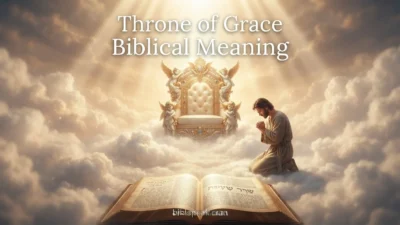
Hebrews 4:16 gives a beautiful invitation:
“Let us therefore come boldly unto the throne of grace.”
The image changes from the Old Testament mercy seat to the New Testament throne of grace, but the heart of the message remains powerful: God invites His people to come to Him for mercy and grace.
Spiritual Significance and Symbolism
The mercy seat carries several important lessons for Christian faith.
God Is Holy and Merciful
The mercy seat reminds us that God’s holiness and mercy belong together.
God does not pretend sin does not matter. Sin is serious. Yet He does not leave people without hope.
His mercy provides a path toward forgiveness.
This can help Christians avoid two extremes: thinking sin is unimportant or believing they are too sinful for God to forgive.
God Wants Us to Come Near
The mercy seat was connected with God’s presence. For Christians, this points to a deeper truth.
When you pray during a difficult day, you can remember that you are not speaking into an empty space. God invites His people to seek Him.
When you feel weak, ashamed, or afraid, you can turn toward Him rather than run away.
Jesus Fulfills the Picture
The greatest Christian meaning of the mercy seat is found in Jesus.
The Old Testament sacrificial system pointed forward to Christ. Jesus offered Himself once for all.
Hebrews 10:10 teaches that believers are sanctified through the offering of the body of Jesus Christ.
This means Christians do not need to depend on repeated animal sacrifices for forgiveness. Christ completed the work of atonement.
The mercy seat therefore becomes a beautiful picture of God’s plan of redemption.
Mercy Changes the Heart
God’s mercy should not make us careless about sin. It should make us thankful.
When someone understands how much mercy God has shown, it can lead to repentance, humility, worship, and a desire to live differently.
For example, someone who has made a serious mistake may feel there is no way back. The biblical message of mercy says: turn toward God, confess your sin, trust His grace, and seek restoration.
Mercy does not excuse sin. Mercy gives hope beyond sin.
Biblical Interpretations in Dreams or Real Life
If someone dreams about a mercy seat, the Bible does not give a fixed dream dictionary saying that every such dream has one exact meaning.
Christian dream interpretation should always be approached carefully and tested against Scripture.
A peaceful image of a mercy seat may remind someone of God’s mercy, forgiveness, presence, or grace.
If the dream involves guilt or fear, it may encourage personal reflection and prayer. The person may need to bring hidden burdens before God and seek forgiveness.
If the mercy seat appears with light or worship, it may serve as a personal reminder to seek God’s presence and trust His grace.
However, not every dream is a divine message. Dreams can also come from daily thoughts, emotions, memories, or experiences.
The safest response is prayer, Scripture, and wisdom rather than fear.
Practical Lessons & Faith Insights
The mercy seat teaches us to trust God’s mercy, take sin seriously, and draw near to Him through Christ.
When guilt weighs on your heart, pray honestly. When you need guidance, seek God’s Word. When you feel unworthy, remember His grace.
God’s mercy is not a reason to hide from Him. It is an invitation to come closer.
Conclusion
The mercy seat biblical meaning is centered on God’s mercy, holiness, presence, forgiveness, and atonement. It was a sacred part of the Old Testament tabernacle and pointed forward to the perfect sacrifice of Jesus Christ.
For Christians, its message is full of hope: God makes a way for sinners to receive mercy and return to His presence.
When life feels heavy, remember that God’s grace is greater than your failures. Seek Him in prayer, trust His Word, and rest in His mercy.

Claire Ella is the Administrator of BiblePeak, overseeing content quality, website operations, and community engagement. She is dedicated to presenting coded Bible insights with accuracy, clarity, and integrity, ensuring every visitor enjoys a trustworthy, meaningful, and enriching experience.