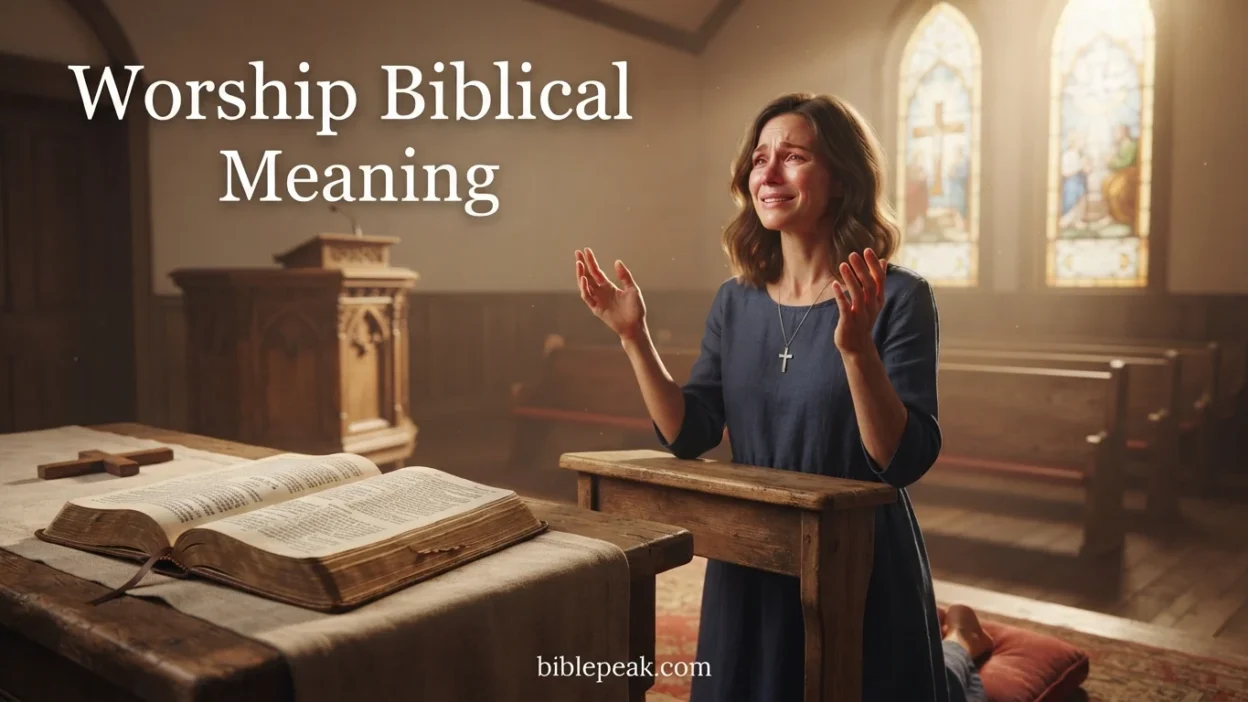
Imagine standing in a quiet church. The music is soft. Your heart feels calm. You close your eyes and think about God. You may sing, pray, lift your hands, or simply sit in silence. In that moment, you are doing more than taking part in a church service. You are worshiping God.
But what is the worship biblical meaning? Is worship only singing songs on Sunday? Does it mean praying, bowing down, or giving thanks? The Bible gives us a much deeper answer.
Biblical worship is about honoring God, loving Him, trusting Him, and giving Him first place in our lives. It is not limited to music or a church building. Worship can happen at home, at work, during prayer, or even in a hard season when you choose to trust God.
Jesus said, “Worship the Lord your God, and serve him only” (Matthew 4:10). This shows that worship is closely tied to our whole life.
When we understand true worship, we begin to see it not as a single act, but as a way of living before God.
Biblical Meaning of Worship
The biblical meaning of worship is to honor, praise, love, and submit to God because of who He is. Worship recognizes God’s holiness, greatness, goodness, and worth.
The Bible often connects worship with bowing down before God. Psalm 95:6 says, “Come, let us bow down in worship.” This picture shows humility. When we worship God, we recognize that He is greater than we are.
Worship Means Giving God First Place
True worship begins when God becomes the center of our lives.
Jesus taught that we should love God with all our heart, soul, and mind (Matthew 22:37). This means worship is not only about what we say with our lips. It also involves what we love, choose, and value.
A person can sing beautiful songs and still have a heart far from God. Jesus warned about this kind of worship in Matthew 15:8–9. God desires worship that comes from a sincere heart.
Worship Is More Than Singing
Music is a beautiful part of Christian worship, but it is not the whole meaning of worship.
Romans 12:1 gives a powerful picture. Paul encourages believers to offer their bodies as a living sacrifice, calling this true worship.
This means our daily lives can become acts of worship.
When you forgive someone, serve others, obey God’s Word, care for your family, or choose honesty when nobody is watching, you can honor God through your actions.
Worship is not only something we do at church. It is how we live for God every day.
Worship Comes From Thankfulness
The Bible also connects worship with thanksgiving.
Psalm 100:4 says to enter God’s gates with thanksgiving and praise. Thankfulness turns our hearts toward God and reminds us of His goodness.
Even when life is difficult, worship can become an expression of trust.
Job gives a strong example. After facing deep loss, he worshiped God (Job 1:20–21). His worship did not mean that his pain was gone. It showed that he still recognized God as worthy of trust.
This gives worship a deep spiritual meaning. We do not worship God only when everything is going well. We can worship Him in both joy and sorrow.
Worship Shows Reverence for God
Another important part of biblical symbolism is reverence.
God is holy, powerful, and worthy of honor. Isaiah 6:1–5 describes Isaiah’s vision of God’s holiness. Isaiah became deeply aware of God’s greatness and his own need for God.
Worship can create the same awareness in our hearts. It reminds us that God is not simply part of our lives. He is Lord over our lives.
Worship Can Be a Response to God’s Presence
Throughout Scripture, people worshiped when they recognized God’s presence and work.
The wise men worshiped Jesus when they found Him (Matthew 2:11). The disciples worshiped Jesus after seeing His authority and resurrection (Matthew 28:9, 17).
Worship can therefore be our response to God’s divine message, presence, grace, and love.
When we remember what God has done, our hearts naturally move toward praise.
Spiritual Significance and Symbolism of Worship
Worship carries deep spiritual meaning for a Christian. It can shape the heart, strengthen faith, and help us focus on God instead of our fears.
Worship Brings Our Focus Back to God
Life can easily fill our minds with worries about money, family, work, health, or the future. Worship helps us look beyond those fears.
It does not mean that our problems disappear. Instead, worship reminds us that God is greater than our problems.
A simple prayer such as, “Lord, I trust You,” can become an act of worship.
Worship Builds Faith
When we praise God for His faithfulness, we remember what He has already done.
Think about a Christian facing an uncertain future. Instead of allowing fear to control every thought, that person chooses to pray, read Scripture, and thank God. This does not ignore the problem. It places the problem in God’s hands.
That is one reason worship can lead to spiritual transformation.
Worship Teaches Humility
Worship reminds us that we are not in control of everything.
This can be difficult. We often want answers right away. We want to know what will happen next. But worship teaches us to trust God’s wisdom.
Psalm 46:10 says, “Be still, and know that I am God.”
Sometimes worship means becoming still and allowing our hearts to rest in God’s care.
Worship Can Strengthen Us in Difficult Times
Paul and Silas worshiped God while they were in prison (Acts 16:25). Their situation was painful, yet they prayed and sang hymns.
Their example teaches an important lesson: worship is not dependent on perfect circumstances.
You can worship God while waiting. You can worship while grieving. You can worship while asking for guidance.
Your worship can become a quiet declaration: “God, I still trust You.”
Biblical Interpretations of Worship in Dreams or Real Life
If you dream about worship, the meaning may depend on the details and your personal situation. The Bible does not teach that every dream is a direct message from God, so dreams should be approached with prayer and wisdom.
A peaceful dream about worship may reflect a desire for God’s presence, spiritual renewal, gratitude, or deeper faith.
A dream where you are worshiping with other believers may represent fellowship, unity, or a desire to grow closer to God’s people.
If the worship feels fearful, confusing, or forced, it may be helpful to examine your heart and pray for wisdom. It does not automatically mean something negative will happen.
In every case, compare spiritual impressions with Scripture. God does not call us to fear or confusion. Pray for wisdom and seek God’s truth rather than relying only on a dream.
Practical Lessons & Faith Insights
True worship begins in the heart. Praise God when you are joyful, trust Him when you are afraid, and seek Him when you need guidance. Make prayer, thanksgiving, obedience, and service part of your daily worship.
Remember that worship is not about performing for people. It is about giving God the honor He deserves.
Conclusion
The worship biblical meaning goes far beyond singing songs or attending church. Worship means honoring God with your heart, words, choices, and daily life.
It is an expression of faith, love, gratitude, humility, and trust. Whether you are celebrating a blessing or walking through a difficult season, you can turn your heart toward God.
Let your life become an offering of worship, and keep seeking God’s presence with a heart full of faith and hope.

David Wyatt is a Bible researcher and Christian writer passionate about uncovering coded biblical insights, symbolism, prophecy, and scriptural meanings. He shares faith-based, well-researched content that inspires deeper Bible study.