
Have you ever judged someone too quickly? Maybe you saw a person make a mistake. You thought they were wrong. You may have even spoken about them without knowing their full story. Later, you may have learned that things were not as they seemed.
We all face moments like this. It is easy to see the faults of others. Yet, it can be hard to see our own faults. This is why the words of Jesus are so important.
In Matthew 7:1, Jesus says, “Judge not, that ye be not judged.” These words teach us to look at our own hearts before we point at someone else’s mistakes.
But what is the judge not biblical meaning? Does it mean Christians should never say that something is wrong? Should we accept every action without question? Or is Jesus teaching us a deeper lesson about love, mercy, and truth?
The Bible gives us a clear answer. Jesus warns us against unfair judgment, pride, and harsh words. He calls us to show others the same mercy we hope to receive from God.
This teaching does not mean that right and wrong no longer matter. It means we should not act as if we know every person’s heart. Only God knows the full truth about each person.
When we understand this lesson, our hearts can grow softer. We can learn to speak with kindness, forgive more freely, and treat people with respect. We can also learn to correct others with love instead of shame.
Let’s explore what the Bible says about judging others and how this powerful teaching can change our daily lives.
Biblical Meaning of Judge Not
The biblical meaning of “judge not” is a call to avoid unfair judgment, pride, and condemnation. Jesus teaches His followers to examine their own hearts and treat others with mercy. He wants us to act with love, humility, and fairness.
1. Jesus Teaches Us Not to Judge Others Unfairly
One of the best-known Bible verses about judging others is Matthew 7:1–2.
Jesus says that we should not judge others, because the way we judge them will also be used to judge us. He asks us to think about how we treat people before we speak against them.
Imagine a friend makes a mistake. You may feel angry or disappointed. You may want to tell others what happened. But Jesus asks you to pause first.
Do you know the whole story? Have you made mistakes too? Would you want someone to treat you with the same harshness?
These questions help us understand His message.
Jesus is not asking us to pretend that every action is right. He is asking us to stop judging people with pride and unfairness.
We should remember that every person needs grace. We all have weaknesses. We all need God’s mercy.
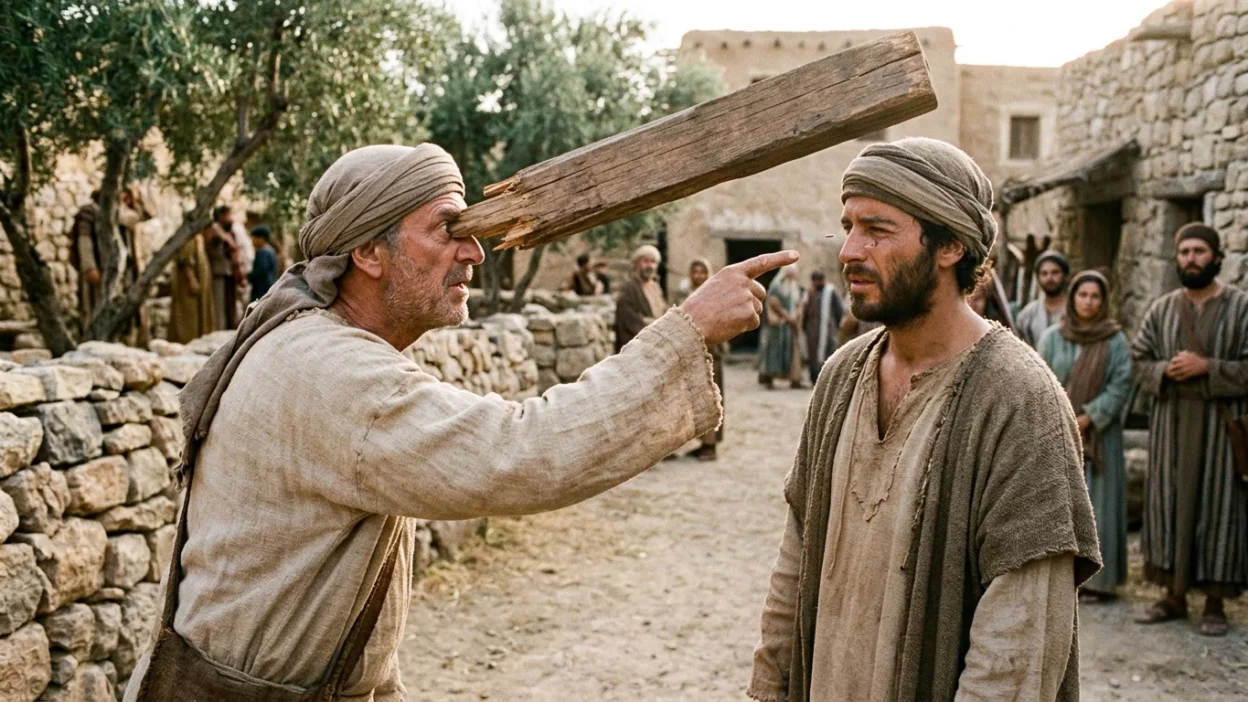
2. The Speck and the Plank in the Eye
Bible reference: Matthew 7:3–5
Jesus uses a simple picture to explain this lesson. He speaks about a person who sees a small speck in another person’s eye but does not notice a large plank in their own eye.
The picture may sound funny, but its meaning is deep.
The speck stands for another person’s small fault. The plank stands for our own serious faults that we may refuse to see.
For example, someone may speak rudely to you. You quickly call them unkind. Yet, you may also speak harshly to your family when you are upset.
Jesus wants us to look at ourselves first.
This does not mean we can never help someone who is doing wrong. In Matthew 7:5, Jesus says that after we remove the plank from our own eye, we can see clearly enough to help with the speck in another person’s eye.
The lesson is clear: correct yourself before you correct others.
When we face our own mistakes, we become less proud. We also become more patient with the struggles of others.
3. God Looks at the Heart
Bible reference: 1 Samuel 16:7
The Bible teaches that people often judge by what they can see. God, however, looks at the heart.
In 1 Samuel 16:7, the Lord tells Samuel not to focus on a person’s outward appearance. God sees what is inside.
This verse reminds us that we do not know everything about another person. Someone may look happy but feel deep pain. Someone may seem distant because they are facing a hard time. Someone who has made a mistake may be ready to change.
We should not decide a person’s worth based on one moment or one action.
Only God knows the full condition of a person’s heart.
This truth helps us show more compassion. It reminds us to listen before we speak and to seek understanding before we make a judgment.
4. The Bible Still Calls Us to Know Right from Wrong
Does “judge not” mean Christians should never make judgments? No. The Bible also teaches the need for wise and fair judgment.
In John 7:24, Jesus says, “Judge not according to the appearance, but judge righteous judgment.”
Here, Jesus warns people not to make shallow judgments based only on what they see. He calls them to look deeper and judge fairly.
For example, if someone is being harmed, we should not ignore the harm just to appear kind. We can speak against harmful actions and protect people while still treating everyone with dignity.
There is a difference between judging an action and condemning a person.
- Unfair judgment: “You made a mistake, so you are a bad person.”
- Wise judgment: “That action caused harm, and it needs to change.”
- Loving correction: “I care about you, and I want to help you make a better choice.”
The Bible calls us to seek truth without pride. We can stand for what is right while remembering that every person needs mercy.
5. Show Mercy Because God Shows Mercy
Bible reference: Luke 6:36–37
Jesus tells His followers to be merciful, just as their Father is merciful. He also warns against judging and condemning others.
This teaching connects judgment with the way we treat people.
God shows patience with us when we fail. He invites us to repent, learn, and return to Him. In the same way, we should leave room for others to grow.
Perhaps a family member hurt your feelings. Perhaps a friend broke your trust. You do not have to pretend that the hurt never happened. You can set healthy limits and seek safety when needed.
But you can also choose not to let anger turn into hate.
Mercy does not mean calling wrong things right. It means responding without cruelty and remembering that people can change.
Jesus calls us to live with both truth and grace.
Spiritual Significance of Judge Not in Christianity
The spiritual meaning of “judge not” goes beyond our words. It reaches into our hearts, thoughts, and relationships. Jesus wants us to become people who show love instead of pride and mercy instead of shame.
1. It Teaches Us Humility
Humility begins when we admit that we are not perfect.
Sometimes, we notice the faults of others because we forget our own. We may think we are better because we have made different choices. But the Bible reminds us that we all need God’s grace.
Romans 3:23 teaches that all have sinned and fall short of the glory of God.
This truth helps us stay humble. When we remember our own need for forgiveness, we become less eager to blame others.
The next time you feel ready to judge someone, pause and ask God to show you your own heart. This small act can help you grow in faith.
2. It Helps Us Love Others Better
In John 13:34, Jesus tells His followers to love one another as He has loved them.
Love does not mean agreeing with every choice. It means treating people with care, even when we disagree with them.
For example, a friend may make a poor decision. You can explain why you are worried without calling them names. You can offer advice without making them feel worthless.
Real Christian love speaks the truth with kindness.
When we stop making quick judgments, we make room for better friendships, stronger families, and more peaceful communities.
3. It Reminds Us to Leave Final Judgment to God
God knows every thought, every hidden struggle, and every part of our story. We see only a small part of another person’s life.
Romans 14:10 reminds believers not to look down on or judge one another, because all will stand before God’s judgment seat.
This verse teaches us to be careful with pride. Our role is not to decide that someone is beyond God’s mercy.
We can offer help, speak truth, and encourage change. But we should not act as if we know a person’s final standing before God.
Let this truth bring peace to your heart. You do not need to carry the burden of deciding another person’s worth. You can trust God to judge with perfect knowledge and justice.
4. It Encourages Spiritual Growth
The teaching of Jesus invites us to change from the inside out.
When we practice mercy, we begin to notice our own thoughts and words. We may become slower to gossip, quicker to listen, and more willing to forgive.
This is part of Christian growth. It is not about becoming perfect in one day. It is about letting God shape our hearts over time.
Through prayer, Bible reading, and honest self-reflection, we can learn to treat others as people who are loved by God.
Biblical Interpretations of Judge Not in Dreams or Real Life
Some people may dream about judging someone, being judged, or standing before a judge. Others may hear Matthew 7:1 during a difficult time in their lives.
These experiences can lead to personal reflection, but the Bible does not give one fixed meaning for every dream about judgment. A dream alone does not prove that God is sending a specific message.
Here are a few ways to reflect on these experiences through Christian faith.
Dreaming That You Are Judging Someone
This dream may lead you to think about how you treat others. Ask yourself whether you have been too quick to blame someone or whether an unresolved conflict needs your attention.
Use the dream as a reason to pray and examine your heart, not as proof that you have sinned.
Dreaming That Someone Is Judging You
This experience may reflect fear, guilt, stress, or concern about what others think. You can use it as an opportunity to consider whether you need to make peace with someone or forgive yourself for a past mistake.
Remember that other people’s opinions do not define your worth before God.
Hearing “Judge Not” During a Difficult Time
If this Bible verse comes to mind when you are upset with someone, take a moment to reflect. Are you seeing the whole situation? Have you listened to the other person’s side? Can you speak the truth with more kindness?
At the same time, do not use this verse to blame yourself for setting boundaries or protecting yourself from harm.
Seeing a Judge or Courtroom in Real Life
A real courtroom may remind you of fairness, responsibility, or the need for truth. But there is no universal biblical rule that such an event predicts a spiritual warning.
Instead, seek wisdom through Scripture, prayer, and sound advice. Let your response be guided by truth, peace, and love rather than fear.
Practical Lessons and Faith Insights
You can practice the teaching of Jesus in small ways each day.
- Pause before speaking: Ask whether your words are fair and kind.
- Check your own heart: Admit your mistakes before pointing out someone else’s.
- Choose mercy: Give people room to learn and change.
- Stand for truth: Speak against harmful actions without insulting others.
- Pray for wisdom: Ask God to help you see people with compassion.
Remember, you can correct a wrong action without condemning the person who made it.
Conclusion
The judge not biblical meaning reminds us to live with humility, love, and mercy. Jesus teaches us to look at our own hearts before pointing out the faults of others. He also calls us to recognize right from wrong with fairness and wisdom.
You do not have to ignore wrongdoing to show kindness. You can speak the truth while treating people with respect. Ask God to guide your words, soften your heart, and help you grow in faith. When you choose mercy over pride, you reflect the love of Christ.

David Wyatt is a Bible researcher and Christian writer passionate about uncovering coded biblical insights, symbolism, prophecy, and scriptural meanings. He shares faith-based, well-researched content that inspires deeper Bible study.