
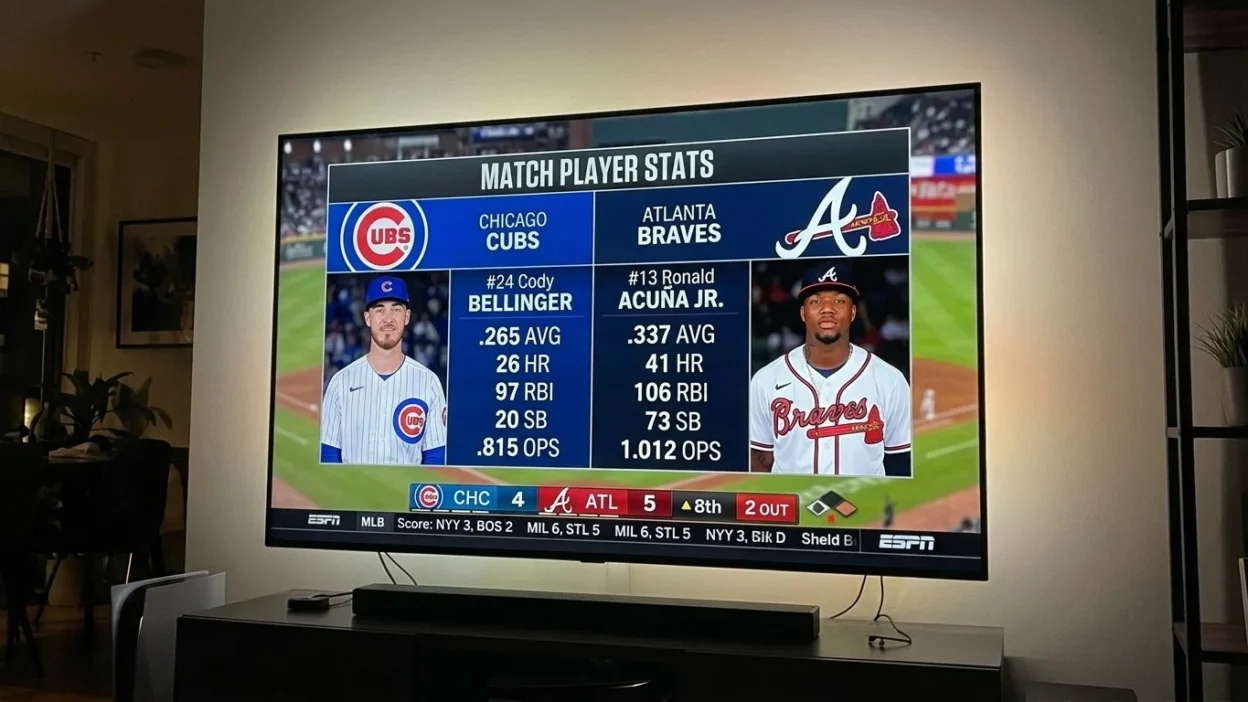
The Chicago Cubs vs Atlanta Braves match player stats help baseball fans understand how individual players perform during a game. These statistics include hits, home runs, runs batted in (RBIs), batting average, strikeouts, walks, and pitching performance. They show which players contribute most to their team’s success.
When the Cubs face the Braves, fans often compare the starting lineups, leading hitters, starting pitchers, and bullpen performance. Batting statistics reveal which players make strong contact and score runs, while pitching statistics show who controls the game from the mound. Fielding stats can also explain how defensive plays affect the final result.
The exact numbers depend on the game date, so it is important to identify the specific matchup before reviewing individual performances. This guide explains the main player statistics, how to compare Cubs and Braves players, and which numbers matter most when analyzing a game.
Quick Answer
Chicago Cubs vs Atlanta Braves match player stats include each player’s hits, runs, home runs, RBIs, batting average, and strikeouts, along with pitchers’ innings, earned runs, and strikeouts. To compare the teams accurately, use the official box score for the specific game, since player performances and statistics change with every matchup.
Chicago Cubs vs Atlanta Braves: A Recent Match Example
A useful example is the September 16, 2026, matchup at Wrigley Field. The Cubs defeated the Braves 8–4, collecting 12 hits compared with Atlanta’s eight. Both teams recorded no errors.
Baseball Reference
This result shows why the final score alone does not tell the whole story. Hits indicate how often batters reached base safely, while runs show how many times players crossed home plate. Pitching statistics help explain how each team limited or allowed scoring opportunities.
Why Do Fans Compare Cubs and Braves Player Stats?
Fans compare the two teams to understand which hitters made the biggest impact, which pitchers controlled the game, and how individual performances shaped the result.
The main reasons include:
- Batting performance: Which players recorded the most hits?
- Power hitting: Who hit a home run or collected extra-base hits?
- Run production: Which players drove runners home?
- Pitching strength: Which pitchers recorded strikeouts and allowed fewer earned runs?
- Team efficiency: Which team made better use of its scoring chances?
- Defensive performance: Did errors or strong fielding plays change the game?
A good comparison considers the full box score rather than relying on one statistic.
Chicago Cubs Player Stats Explained
The Chicago Cubs’ player statistics show how their batters, starting pitcher, relief pitchers, and fielders performed in a particular game. Each player’s contribution matters, even when it does not appear directly in the final score.
Important Cubs Batting Stats
- AB (At-bats): The number of official batting attempts counted as at-bats.
- H (Hits): The number of successful hits.
- R (Runs): The number of times a player scores.
- HR (Home runs): Hits that allow the batter to circle the bases and score.
- RBI (Runs batted in): Runs credited to a batter because of their plate appearance, with some exceptions.
- BB (Walks): Times a batter receives first base after four balls.
- SO (Strikeouts): Times a batter strikes out.
- SB (Stolen bases): Times a runner successfully takes an extra base while the ball is in play.
For example, a Cubs player who records two hits and drives in two runs may have made a major contribution, even without hitting a home run.
Important Cubs Pitching Stats
Pitching statistics explain how effectively the Cubs prevent the Braves from scoring.
- IP (Innings pitched): The number of innings or partial innings completed.
- ER (Earned runs): Runs charged to a pitcher that are not the result of errors or passed balls under scoring rules.
- K (Strikeouts): Batters retired by strikeout.
- BB (Walks allowed): Batters given first base on balls.
- ERA (Earned run average): Earned runs allowed per nine innings, adjusted for the innings pitched.
A pitcher who works several innings while allowing few earned runs can help keep the Cubs in a strong position.
Atlanta Braves Player Stats Explained
The Atlanta Braves’ player stats measure how well their hitters create runs and how effectively their pitchers prevent the Cubs from scoring. The same statistical categories apply to both teams, making direct comparisons easier.
Important Braves Batting Stats
Braves batting statistics commonly include:
- Batting average (AVG): The number of hits divided by official at-bats.
- On-base percentage (OBP): How often a player reaches base through hits, walks, and hit-by-pitches, subject to official scoring rules.
- Slugging percentage (SLG): A measure of batting power based on total bases per at-bat.
- OPS: On-base percentage plus slugging percentage.
- Home runs: A measure of power hitting.
- RBI: The number of runs credited to a batter.
- Stolen bases: Successful attempts to advance to another base.
These statistics help explain whether a Braves player contributes through consistent hitting, power, or speed.
Important Braves Pitching Stats
Braves pitching statistics help fans evaluate both starting pitchers and relievers.
- Strikeouts: Show how often a pitcher retires batters without allowing the ball to be put into play.
- Innings pitched: Indicate how long a pitcher remains in the game.
- ERA: Measures earned runs allowed per nine innings.
- WHIP: Walks plus hits allowed per inning pitched.
- Saves: Usually credited to relievers who finish qualifying close games while meeting the official requirements.
No single statistic tells the whole story. A pitcher may record many strikeouts but still allow several runs, so it is useful to consider multiple measures together.
Chicago Cubs vs Atlanta Braves Player Stats Comparison Table
The following table summarizes the main statistics to compare when reviewing a specific game.
| Statistic | Chicago Cubs | Atlanta Braves |
| Runs | Check game box score | Check game box score |
| Hits | Check game box score | Check game box score |
| Home runs | Review Cubs hitters | Review Braves hitters |
| RBIs | Compare run production | Compare run production |
| Batting average | Compare player averages | Compare player averages |
| Strikeouts by batters | Review Cubs lineup | Review Braves lineup |
| Starting pitcher ERA | Check pitching record | Check pitching record |
| Innings pitched | Review Cubs pitchers | Review Braves pitchers |
| Errors | Check defensive record | Check defensive record |
For the September 16, 2026, game, the Cubs finished with eight runs and 12 hits, while the Braves finished with four runs and eight hits. Both teams recorded zero errors.
Baseball Reference
The individual player totals should be taken from that game’s official box score rather than estimated from season averages.
When Should You Use Each Player Statistic?
Different statistics answer different questions about the game.
- Use hits and batting average to evaluate a player’s hitting consistency.
- Use home runs and slugging percentage to measure power hitting.
- Use RBIs and runs scored to understand run production.
- Use OBP to see how often a player reaches base.
- Use strikeouts and innings pitched to evaluate pitching workload and effectiveness.
- Use ERA and WHIP to compare pitchers across their performances.
- Use errors and defensive plays to assess fielding.
- Use stolen bases to understand baserunning impact.
For a fair Cubs-versus-Braves comparison, consider both individual performances and the overall team result.
10 Examples of How to Read Match Player Stats
The examples below are hypothetical and explain how to interpret a box score. They are not claimed results from a specific Cubs-Braves game.
- A player records three hits: This shows a strong performance at the plate.
- A player hits a home run: The batter scores and may bring other runners home.
- A player records three RBIs: The player receives credit for driving in three runs.
- A player scores twice: The player crosses home plate two times.
- A pitcher strikes out eight batters: The pitcher records eight strikeouts.
- A pitcher completes six innings: The pitcher provides six innings of work.
- A pitcher allows one earned run: The pitcher limits scoring over the innings pitched.
- A batter draws two walks: The player reaches first base twice through walks.
- A player steals a base: The player successfully advances to another base without a hit.
- A team records several hits but few runs: The team may have struggled to bring runners home.
These examples show why reading several statistics together gives a clearer picture of player performance.
Common Mistakes When Reading Baseball Stats
Baseball statistics can be confusing when fans look at only one number.
Mistake 1: Treating hits and runs as the same thing. A hit does not automatically result in a run. A player must eventually reach home plate.
Mistake 2: Assuming a high batting average means more home runs. Batting average measures hits per at-bat, not power.
Mistake 3: Comparing pitchers only by strikeouts. Innings pitched, earned runs, walks, and other factors also matter.
Mistake 4: Confusing RBI with runs scored. RBI credits the batter for certain runs driven in, while runs scored credits the player who crosses home plate.
Mistake 5: Mixing game stats with season stats. A season batting average is not the same as a player’s performance in one game.
Mistake 6: Ignoring the game date. Lineups, player availability, and performances change over time.
Memory Trick: Remember the Main Baseball Stats
Use this simple memory guide:
- H = Hits
- R = Runs
- HR = Home runs
- RBI = Runs batted in
- K = Strikeouts
- IP = Innings pitched
- ERA = Earned runs per nine innings
- AVG = Batting average
- OBP = On-base percentage
- OPS = On-base percentage plus slugging percentage
Remember: Batters create scoring chances, runners score, and pitchers try to stop the opposition. This basic idea makes most baseball box scores easier to understand.
American vs British English in Baseball
Baseball terminology is primarily associated with American English because Major League Baseball is based in the United States.
Some words, such as team, player, score, and performance, are common in both American and British English. However, baseball-specific terms such as inning, bullpen, home run, strikeout, and RBI are much more familiar in American baseball coverage.
British sports coverage may use terms from cricket, including innings in a different grammatical context. In baseball, an individual team bats during its half of an inning, and a standard game usually has nine innings.
For Cubs-Braves statistics, use the terminology shown in the official MLB box score.
Similar Baseball Stats and Terms
Understanding related baseball terms can help you interpret game reports more accurately.
- Box score: A summary of team and individual statistics for a game.
- Batting average: Hits divided by official at-bats.
- On-base percentage: A measure of how often a batter reaches base.
- Slugging percentage: A measure of batting power.
- OPS: A combined measure of on-base ability and power.
- ERA: Earned runs allowed per nine innings.
- WHIP: Walks and hits allowed per inning pitched.
- Fielding percentage: A measure based on successful defensive chances compared with total chances.
- Win probability: An estimate of a team’s chance of winning at a particular point in a game.
- Starting lineup: The players selected to begin the game.
Each term describes a different part of baseball performance, so using the correct one makes match analysis clearer.
Final Verdict: What Matters Most in Cubs vs Braves Stats?
The most useful Chicago Cubs vs Atlanta Braves match player stats are hits, runs, home runs, RBIs, batting average, strikeouts, innings pitched, and ERA. Together, these numbers explain how players contribute on offense and defense.
The final score provides the result, but the box score explains how the game unfolded. A complete analysis should consider the starting pitchers, relief pitchers, leading hitters, baserunning, and defensive performance.
Frequently Asked Questions
1. Where can I find Chicago Cubs vs Atlanta Braves match player stats?
You can find official player statistics on including game box scores, batting results, pitching statistics, and starting lineups. Choose the correct game date to see the relevant figures.
2. What stats matter most in a Cubs vs Braves game?
The most useful statistics include runs, hits, home runs, RBIs, batting average, strikeouts, innings pitched, and ERA. These numbers help explain offensive production and pitching performance.
3. How do I find the top hitter in the matchup?
Compare each player’s hits, home runs, RBIs, and on-base or slugging percentage. For a single-game review, prioritize that game’s statistics rather than season totals alone.
4. What does RBI mean in baseball?
RBI stands for run batted in. It credits a batter for certain runs scored as a result of the batter’s plate appearance, subject to official scoring rules.
5. What does ERA mean for Cubs and Braves pitchers?
ERA stands for earned run average. It estimates how many earned runs a pitcher allows per nine innings. A lower ERA generally indicates better run prevention over the period measured.
6. Are season stats the same as match player stats?
No. Match stats describe a player’s performance in one game. Season stats combine performance across multiple games during the season.
7. How can I compare Cubs and Braves pitchers fairly?
Compare innings pitched, earned runs, strikeouts, walks, and WHIP. Consider the game situation and workload, too, because a starting pitcher and a relief pitcher may have very different roles.
8. Who won the September 16, 2026, Cubs vs Braves game?
The Chicago Cubs won 8–4 at Wrigley Field. The Cubs recorded 12 hits, while the Atlanta Braves recorded eight. Neither team made an error.
Baseball Reference
Remember This
The Chicago Cubs vs Atlanta Braves match player stats tell the story behind the final score. Hits show batting success, runs measure scoring, RBIs describe run production, and pitching statistics reveal how teams limit their opponents.
Always check the exact game date and use the official box score for accurate player-by-player information.
Conclusion
Chicago Cubs vs Atlanta Braves match player stats give baseball fans a practical way to understand individual performances and team results. By reviewing batting, pitching, fielding, and baserunning statistics, you can identify the players who made the biggest contributions and see why one team came out ahead.
For the most accurate analysis, use the official MLB box score for the game you want to review. Check the hits, runs, home runs, RBIs, strikeouts, innings pitched, and earned runs together instead of relying on a single number. This approach makes it easier for new fans and experienced baseball followers to understand every Cubs-Braves matchup.

Alexander Cody is a Bible researcher and Christian writer at BiblePeak, dedicated to exploring biblical codes, Scripture insights, and faith-based studies. He creates clear, engaging, and well-researched content that helps readers better understand the Bible and its timeless messages.